

KLOW Peptide Blend: Research Overview & Component Science
In laboratory literature and vendor practice, blends carrying names like KLOW are typically discussed as bringing together a body-protection-class peptide, a systemic repair fragment, a copper-binding tripeptide, and an anti-inflammatory tripeptide, each studied independently for a distinct but overlapping role in tissue-repair and connective-tissue research models. This guide examines what that combination approach means mechanistically, how blend formulations are verified analytically, and what a research team should evaluate before selecting a multi-peptide preparation — strictly for in-vitro laboratory and research use.
What Is the KLOW Peptide Blend?
The KLOW peptide blend belongs to a category of research products that has become increasingly common in the peptide-science marketplace over the last several years: the multi-component “synergy” formulation. Rather than isolating a single sequence for a single mechanism, a blend combines two or more peptides — usually selected because their individual research literatures point toward complementary or overlapping biological pathways — into one vial.
It is important to be precise about what “KLOW” denotes and what it does not. It is not a single peptide with its own unique amino acid sequence, its own CAS number, or its own standalone identity in the peptide-chemistry literature the way BPC-157 or GHK-Cu are. It is a coined product name used across the research-peptide marketplace to describe a category of formulation: several repair-associated peptide classes combined into a single research preparation. Because it is a blend rather than a single molecular entity, the exact internal composition, the precise mass contribution of each component, and the molar ratio between components are manufacturer-specific and lot-specific facts — not universal constants that apply to every product sold under a similar name.
What can be discussed with confidence is the category logic behind formulations of this type. Across the research-peptide marketplace, blends named in this family — KLOW, its sibling GLOW blend, and combination products like the Wolverine Stack — are consistently built around a shared thematic core: connective tissue, dermal/structural protein architecture, and localized repair signaling. The naming convention itself (short, evocative, skin- or repair-adjacent) is a marketing convention common to the sector rather than a strict letter-by-letter acronym for the underlying sequences, and this guide will not speculate about a literal decoding of the product name. Instead, the sections below examine the peptide classes most commonly discussed in connection with blends of this type, how each is studied independently, why combining them is mechanistically interesting to research teams, and — critically — how to evaluate sourcing and analytical verification for a multi-component product where purity questions are inherently more complex than for a single-peptide vial.
The Component Classes Behind a KLOW-Type Formulation
Rather than asserting a fixed, universal recipe, this section surveys the peptide classes most frequently discussed by researchers and vendors when describing formulations marketed under names like KLOW. Each class below has its own independent research literature, its own established chemical identity, and its own mechanistic rationale — the blend concept simply brings representative members of these classes together into a single research vial. Confirmation of exact composition for any specific product should always be sourced from that product’s own documentation and Certificate of Analysis.
| Peptide Class | Representative Sequence | Structural Category | Primary Research Focus |
|---|---|---|---|
| Body-protection-class peptide | BPC-157-type pentadecapeptide | 15-residue synthetic sequence, partial-sequence derived | Gastric/tissue protection signaling, angiogenesis-adjacent research, localized repair models |
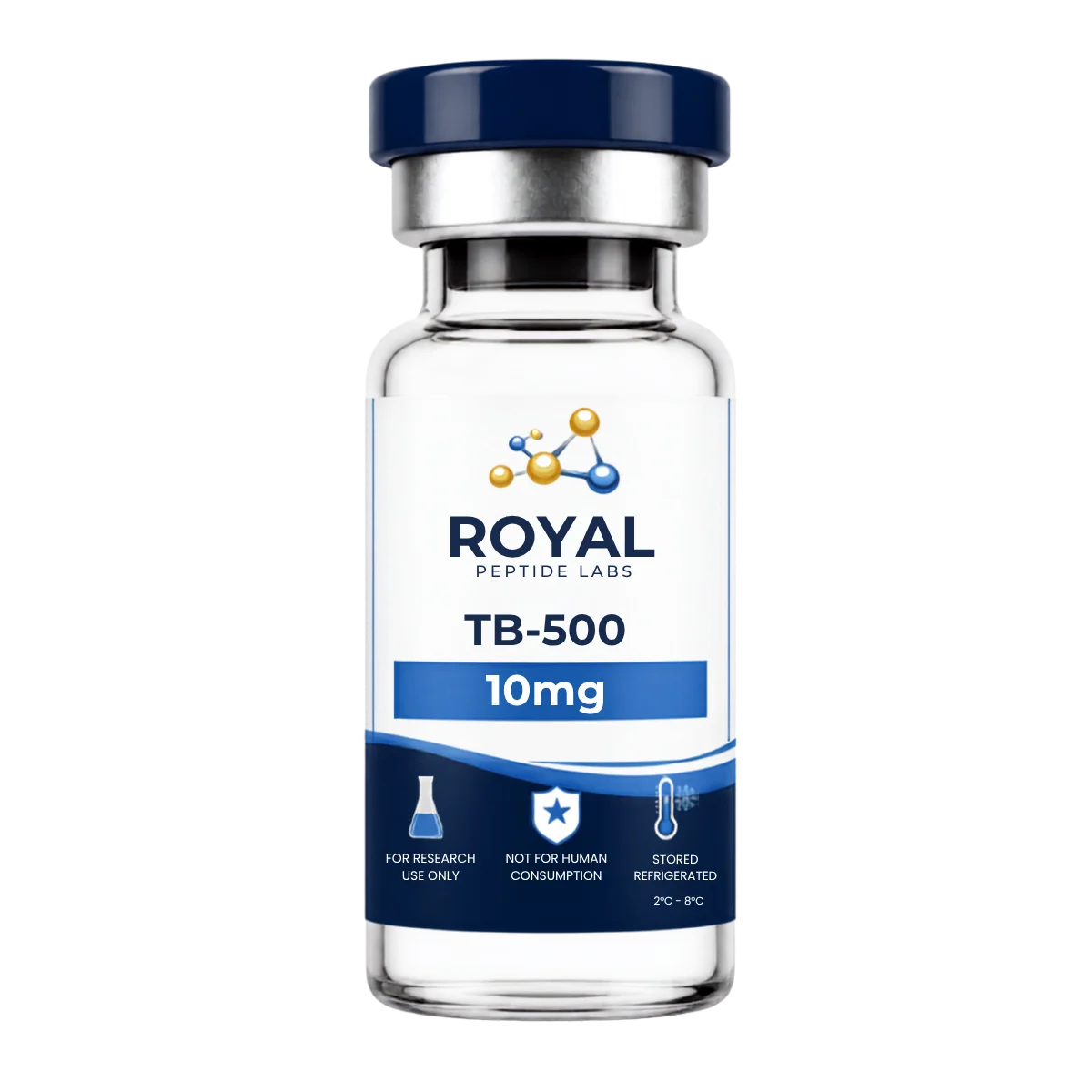
| Systemic repair fragment | Thymosin Beta-4 / TB-500-type sequence | Actin-binding domain fragment of a 43-residue protein, or the full protein depending on manufacturer | |
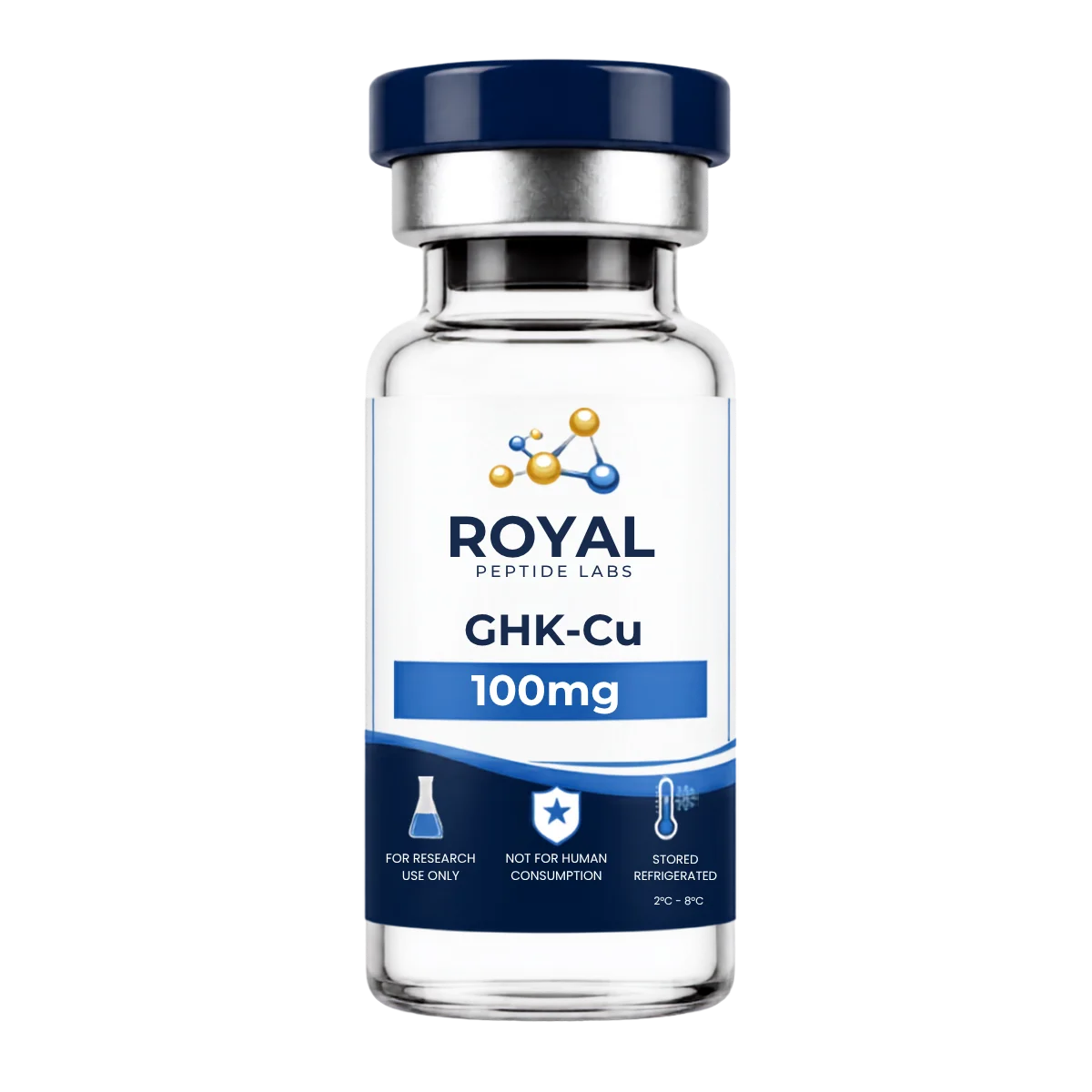
| Copper-binding tripeptide | GHK-Cu-type sequence | Tripeptide (glycyl-histidyl-lysine) complexed with a copper (II) ion | Extracellular matrix remodeling, collagen/elastin signaling, dermal research models |
| Anti-inflammatory tripeptide | KPV-type sequence | C-terminal tripeptide fragment associated with the alpha-MSH family | Localized inflammatory signaling research, epithelial barrier research models |
Two structural observations are worth making about this table. First, the four classes span a genuine size gradient — from short tripeptides at roughly 300–400 daltons up through mid-sized fragments in the low single-digit kilodalton range — which is itself analytically significant, because it means a single HPLC method optimized for one class will not necessarily be optimized for all of them simultaneously (a point revisited in the purity-verification section below). Second, each class occupies a genuinely distinct corner of repair biology: matrix remodeling, cytoskeletal dynamics, localized inflammatory tone, and general tissue-protection signaling are not the same research question, even though they are frequently studied in adjacent or overlapping model systems. That non-redundancy is precisely why blend formulations are conceptually interesting to combination-research designs — the classes are complementary rather than duplicative.
The KLOW 80mg product page and its associated Certificate of Analysis remain the correct reference points for what a specific lot actually contains.
Why Combine Multiple Repair-Oriented Peptides? The Synergy Rationale in Experimental Design
From a research-design standpoint, the appeal of a multi-component formulation is not mysterious — it mirrors a pattern seen throughout pharmacological and cell-biology research generally, where combination approaches are studied because single-target interventions frequently fail to capture the full complexity of a biological process. Tissue repair, in particular, is not a single-pathway event. It is a coordinated cascade involving vascular signaling, cytoskeletal reorganization, extracellular matrix synthesis and remodeling, and inflammatory resolution, occurring in overlapping but temporally distinct phases. A research design that isolates only one node in that cascade may miss cross-talk effects that only become visible when multiple pathways are engaged concurrently.
This is the conceptual logic that underlies combination formulations like KLOW: each component class discussed in the previous section maps onto a different phase or axis of the repair cascade. Matrix remodeling research (associated with copper-tripeptide-class research), cytoskeletal/migration research (associated with the systemic repair fragment class), localized tissue-protection signaling (associated with the body-protection-class peptide), and inflammatory-tone research (associated with the anti-inflammatory tripeptide class) are each legitimate, independently published research threads. A blend allows a single-vial research preparation to touch multiple threads at once, which can be operationally convenient for laboratories running exploratory or hypothesis-generating work across a broader panel of endpoints before narrowing down to single-pathway follow-up studies.
What “Synergy” Means — and Does Not Mean — in This Context
It is worth being precise about terminology here, because “synergy” is often used loosely in marketing contexts. In rigorous pharmacological usage, synergy refers to a specific, testable claim: that the combined effect of two agents exceeds the sum of their individual effects on a defined endpoint, under a defined experimental design (commonly evaluated using isobologram-style or Bliss-independence-style analytical frameworks).
For research purposes, this distinction matters. A multi-peptide blend is best understood as a combination formulation designed for exploratory or mechanistic research convenience, not as a pre-validated synergistic system.
Operational Advantages Independent of Mechanistic Synergy
Even setting aside the open question of formal synergy, there are practical reasons a laboratory might select a blend formulation for certain phases of a research program:
- Exploratory screening efficiency — useful in early-stage, hypothesis-generating work where a research group wants to observe a broad repair-pathway signature before committing resources to isolating individual components.
None of these operational advantages substitute for the mechanistic verification that a dedicated single-component comparison arm provides. Most rigorous combination-research protocols, including those referenced in the Wolverine Stack research guide, pair blend-formulation data with single-peptide control arms specifically so that any observed effect can eventually be attributed to a specific component or component interaction rather than left as an unresolved blend-level observation.
Mechanistic Pathways Under Investigation for Each Component Class
Understanding a blend formulation requires understanding the independent mechanistic literature behind each component class it draws from. The subsections below summarize, at a research-relevant level of detail, the pathways most frequently investigated for each of the four classes introduced earlier. These summaries describe established research directions in the broader peptide-science literature; they are not claims about outcomes in any specific study, model, or product.
Body-Protection-Class Peptide Research
Peptides in this class are most frequently discussed in connection with localized tissue-protection signaling, gut-epithelium-adjacent research models, and angiogenesis-related pathway investigation. A substantial portion of the published research literature on this class has focused on gastrointestinal and musculoskeletal tissue models, examining how the peptide interacts with growth-factor signaling systems (including pathways associated with vascular endothelial growth factor expression) and with markers of localized tissue integrity.
Systemic Repair Fragment Research
This class is most closely associated with actin-binding biology — the sequence is derived from, or corresponds to, a protein family known to interact with monomeric actin, a core structural protein involved in cell motility and cytoskeletal reorganization. Because actin dynamics underlie nearly every form of directed cell movement, this class has attracted research interest across a wide range of tissue-repair contexts, from dermal models to cardiac and corneal research applications.
Copper-Binding Tripeptide Research
The copper-tripeptide class occupies a distinct mechanistic niche connected to extracellular matrix biology. This tripeptide is a naturally occurring copper-binding motif found in human plasma at declining concentrations across the lifespan, and its research literature has focused heavily on collagen and elastin gene expression, matrix metalloproteinase regulation, and antioxidant-adjacent signaling in dermal fibroblast models. Because copper is itself a required cofactor for several enzymes involved in collagen cross-linking (notably lysyl oxidase family enzymes), the copper-complexed tripeptide format is mechanistically distinct from a simple copper salt — the peptide component is understood to influence receptor-mediated signaling and cellular copper trafficking rather than acting purely as an ionic copper source.
Anti-Inflammatory Tripeptide Research
The fourth class draws on melanocortin-pathway-adjacent biology. As a C-terminal tripeptide fragment associated with the alpha-melanocyte-stimulating hormone family, sequences in this class have been investigated for their interaction with melanocortin receptor signaling independent of pigmentation pathways, with particular research interest in epithelial barrier models and localized inflammatory-marker assays. This class is frequently discussed in the literature alongside gut-barrier and skin-barrier research models, where the research question typically concerns modulation of local cytokine signaling rather than the pigmentation-related effects associated with other melanocortin-pathway peptides.
Cross-Pathway Research Questions a Blend Raises
When these four mechanistic threads are combined in a single formulation, several genuinely novel research questions emerge that are not answerable by studying any single component in isolation:
- Does concurrent copper-tripeptide-driven matrix signaling alter the kinetics of actin-mediated cell migration observed with the systemic repair fragment class in the same model system?
- Does the anti-inflammatory tripeptide class’s modulation of local cytokine tone change the angiogenesis-adjacent signaling patterns associated with the body-protection-class peptide?
- Are there receptor-level interactions (shared downstream signaling intermediates, for example) between the melanocortin-adjacent pathway and the growth-factor pathways implicated in the other three classes?
These are precisely the kind of cross-pathway questions that motivate combination-formulation research designs, and they remain, as of 2026, active areas of investigation rather than settled findings — a point the research peptides to watch in 2026 overview discusses in the broader context of the field’s current trajectory.
Structural & Molecular Snapshot of the Underlying Peptide Classes
The table below summarizes established structural facts about each class at the level of general chemical identity — not proprietary, product-specific composition data.
| Class | Residue Count / Format | Approximate Molecular Weight Range | Notable Structural Feature |
|---|---|---|---|
| Body-protection-class peptide | 15-residue linear sequence | ~1,400–1,450 Da | Partial-sequence-derived synthetic peptide; no disulfide bridging |
| Systemic repair fragment | Fragment or full 43-residue protein, depending on manufacturer labeling conventions | ~4,900 Da (full protein) or lower for fragment-only preparations | Actin-binding domain; N-terminal acetylation in the native protein form |
| Copper-binding tripeptide | 3-residue sequence complexed with Cu(II) | ~340 Da (peptide) plus bound copper ion | Naturally occurring human plasma peptide; metal-coordination chemistry |
| Anti-inflammatory tripeptide | 3-residue linear sequence | ~370–375 Da | C-terminal fragment structurally related to the alpha-MSH family |
This size spread has direct methodological consequences. Short tripeptides at 300–400 daltons behave very differently under reverse-phase HPLC gradients than a mid-sized 4,900-dalton protein fragment; retention times, ideal column chemistries, and even ionization behavior under mass spectrometry differ substantially across this range. A laboratory receiving a multi-component vial and wishing to independently verify its contents should expect that a single, simple isocratic HPLC run is unlikely to resolve and quantify all four component classes with equal confidence — a topic explored further in the analytical-verification section below and in the site’s dedicated HPLC vs. mass spectrometry comparison.
It is also worth noting that the copper-tripeptide class is chemically distinctive within this table because it is not a purely organic peptide — it is a metal-peptide coordination complex. This has implications for how it is handled analytically (copper’s redox activity and chromophore properties actually make UV-based detection comparatively straightforward for this component) and for how it should be stored, since copper-peptide complexes can behave differently under prolonged light exposure than purely organic peptide sequences.
Research Applications & Model Systems Where Blend Formulations Appear
This section surveys the model systems most commonly discussed in the literature for the individual component classes that make up formulations like KLOW, with the understanding that combination-specific (rather than single-component) research remains a comparatively newer and less-studied area.
Cell Culture & Monolayer Models
These models are attractive because they are relatively low-cost, highly reproducible, and allow precise control over peptide concentration and exposure duration — variables that are far harder to control in whole-organism research contexts.
Explant and Ex Vivo Tissue Models
Tendon, ligament, and dermal explant models appear frequently in the connective-tissue literature relevant to this blend category, allowing researchers to examine tissue-level responses (collagen organization, matrix remodeling markers) in a system that retains more of the native tissue architecture than a simple monolayer culture, while still avoiding the ethical and logistical complexity of live-animal research.
Angiogenesis & Vascular Research Models
Because the body-protection-class peptide has an established research association with vascular endothelial growth factor pathway signaling, angiogenesis-focused assay systems (including tube-formation assays in endothelial cell culture) are a recurring model type in this literature, generally used to investigate how localized repair signaling interacts with new vessel formation in injured or disrupted tissue models.
Inflammatory-Marker & Cytokine Panel Studies
The anti-inflammatory tripeptide class is most frequently studied using cytokine panel methodology — quantifying changes in pro-inflammatory and anti-inflammatory marker expression in epithelial or immune-cell-adjacent culture systems following peptide exposure, often in models designed to simulate a localized barrier-disruption or irritant-exposure scenario.
Model Systems Summary
| Model System | Primary Component Class Studied | Typical Endpoint Measured |
|---|---|---|
| Fibroblast/keratinocyte scratch assay | Copper-tripeptide, systemic repair fragment | Migration rate, monolayer closure time |
| Tendon/ligament/dermal explant | Copper-tripeptide, body-protection-class | Collagen organization, matrix remodeling markers |
| Endothelial tube-formation assay | Body-protection-class peptide | Angiogenesis-related network formation |
| Cytokine panel / barrier-disruption model | Anti-inflammatory tripeptide | Pro-/anti-inflammatory marker expression |
Combination-specific model systems — where all four classes are studied concurrently as a formulated blend rather than as individual components — are a less mature area of the literature, and research teams pursuing this angle should expect to design custom comparative protocols rather than relying on an established, standardized combination-assay methodology.
KLOW, GLOW, and the Wolverine Stack: How Royal Peptide Labs’ Repair Blends Differ
Because exact formulations are proprietary and lot-specific, the comparison below focuses on what can be responsibly stated: total listed peptide content, general thematic emphasis as described on each product’s own page, and the class of research question each is typically discussed in connection with. This is a directional orientation guide, not a substitute for reading each product’s individual documentation.
| Product | Listed Total Peptide Content | General Thematic Emphasis | Where to Learn More |
|---|---|---|---|
| KLOW | 80mg per vial | Connective-tissue and multi-pathway repair-signaling research | KLOW 80mg product page |
| GLOW | 70mg per vial | Dermal/matrix-remodeling-adjacent repair research | GLOW peptide blend guide |
| Wolverine Stack | 10mg per vial | Combination repair-signaling research, positioned as a leaner two-to-three-component formulation | Wolverine Stack peptide guide |
Researchers comparing these products should rely on the listed total peptide content, the product’s own documentation, and its Certificate of Analysis, rather than inferring composition from the product name alone.
Choosing Between Blend Products for a Specific Research Question
Because these blends emphasize somewhat different thematic clusters, the choice between them is best driven by the specific research question:
- Research questions centered on broad connective-tissue signaling across multiple pathways are more consistent with the KLOW-type formulation’s thematic positioning.
- Research questions centered specifically on dermal matrix and collagen-adjacent signaling may align more closely with a GLOW-type formulation, discussed in greater depth in the GLOW peptide blend guide.
- Research programs wanting a leaner combination with fewer components and a lower total peptide mass per vial may find the Wolverine Stack a more tractable starting point for building up combination-research protocols before moving to a broader blend.
In all three cases, the underlying component-class logic discussed earlier in this guide — body-protection-class peptides, systemic repair fragments, copper-binding tripeptides, and anti-inflammatory tripeptides — provides the conceptual vocabulary for understanding what each formulation is thematically built around, even though exact ratios and inclusion decisions remain manufacturer-proprietary.
The Core Analytical Challenge
High-performance liquid chromatography (HPLC) separates compounds based on their differential interaction with a stationary phase as they are carried through a column by a mobile phase — different compounds elute (exit the column) at different times, producing a chromatogram with distinct peaks. For a single-peptide vial, the goal is straightforward: confirm one dominant peak at the expected retention time, with minimal area under any secondary peaks (which would indicate impurities or degradation products). For a blend containing four structurally distinct peptide classes spanning a molecular weight range from roughly 340 daltons to nearly 5,000 daltons, a single HPLC method is far less likely to cleanly resolve, identify, and quantify every component with equal confidence in one run.
- Multiple HPLC gradient methods, each optimized for a different segment of the molecular weight and polarity range represented in the blend.
- Mass spectrometry (MS), which identifies compounds by mass-to-charge ratio rather than retention time alone, providing an orthogonal confirmation that a peak observed on HPLC actually corresponds to the expected peptide rather than a co-eluting impurity of similar retention behavior.
- UV spectral analysis at multiple wavelengths, since the copper-tripeptide component in particular has distinctive absorbance characteristics related to its copper-coordination chemistry that differ from the aromatic-residue-dependent absorbance typical of purely organic peptides.
What a Rigorous Blend Certificate of Analysis Should Document
Given this added complexity, a Certificate of Analysis for a blend product carries more informational weight than for a single-peptide vial, and research teams should expect — and request, if not provided by default — a document that addresses each component individually rather than reporting only an aggregate purity figure for the vial as a whole. An aggregate purity percentage on a blend product is of limited analytical value on its own, since it does not indicate whether purity is evenly distributed across all components or concentrated in one dominant peak while a minor component is poorly characterized.
Common Analytical Pitfalls Specific to Blends
| Pitfall | Why It Happens | Mitigation |
|---|---|---|
| Co-elution masking | Two components with similar retention times overlap on a single HPLC method | Use orthogonal MS confirmation; adjust gradient method per component class |
| Aggregate purity reporting only | Simplified reporting regards the blend as a single analyte | Request per-component breakdown in the Certificate of Analysis |
| Missed low-mass components | Standard peptide HPLC methods are sometimes optimized for larger fragments and under-resolve short tripeptides | Confirm the testing method’s validated range covers the smallest component class present |
| Copper-complex quantification error | Copper-peptide complexes can be misquantified if UV detection wavelength is not appropriate for the coordination chemistry | Confirm wavelength selection is appropriate for metal-peptide complexes, not just standard 214/280nm peptide bond detection alone |
Royal Peptide Labs documents its testing methodology and quality standards directly on its own site, which research teams should review when evaluating a blend product’s analytical rigor rather than relying solely on marketing claims of “verified purity.”
Reading a Blend Certificate of Analysis: What to Look For
A Certificate of Analysis (COA) is the single most important document a research team should review before incorporating any peptide product — blend or single-component — into a study. The checklist below outlines what a rigorous blend COA should include.
Essential COA Elements for a Multi-Component Blend
- Lot-specific identifiers — a batch or lot number unique to the specific vial or production run, allowing traceability back to a specific manufacturing event.
- Per-component identification — confirmation that each of the constituent peptide classes present in the blend has been independently identified, typically via mass spectrometry, rather than inferred from an aggregate chromatographic profile.
- Per-component purity data — a purity percentage (commonly expressed via HPLC peak area) reported separately for each identified component, not just a single blended figure.
- Testing methodology disclosure — a description (even brief) of which analytical methods were used (HPLC gradient type, MS ionization mode, column specifications) so an independent laboratory could, in principle, reproduce the verification.
- Third-party laboratory attribution — ideally, testing performed by an independent laboratory rather than solely in-house, reducing conflict-of-interest concerns around self-reported purity data.
Red Flags in Blend Documentation
- A COA that reports only a single purity percentage for the entire vial with no per-component breakdown.
- No mass spectrometry data — chromatographic retention time alone is not sufficient to confirm compound identity, since impurities or unrelated compounds can co-elute at similar retention times.
- No lot number linking the COA to the specific vial in hand — a generic or “representative” COA reused across many production runs is a meaningful transparency gap.
- Testing performed exclusively by the seller with no third-party verification and no methodology disclosure.
Royal Peptide Labs’ Certificate of Analysis page is the correct reference point for reviewing documentation associated with the KLOW 80mg product specifically. Research teams evaluating any research-peptide supplier — not limited to blend products — should apply this same checklist consistently, and the site’s broader guide on what to look for in research-peptide purity documentation expands on several of these points in more general terms applicable across the full product catalog.
Why Degradation Rates Differ Across Classes
Peptide stability in solution is influenced by several structural and chemical factors, including sequence length, the presence of specific vulnerable residues (methionine and cysteine, for instance, are more oxidation-prone than many other amino acids), susceptibility to hydrolysis at specific bond types, and — for the copper-tripeptide class specifically — the stability of the metal-coordination complex itself under varying pH and light conditions. Because the four component classes discussed in this guide differ substantially in size, sequence composition, and (in one case) coordination chemistry, it should not be assumed that they share identical stability profiles simply because they are packaged in the same vial.
Freeze-Thaw Sensitivity
Repeated freeze-thaw cycling is a well-established stressor for peptide integrity generally, and this concern is compounded in a multi-component blend where each class may tolerate freeze-thaw cycling differently.
Sourcing a Research-Grade KLOW Blend: Supplier Evaluation Criteria
Because blend products carry more analytical complexity than single-component peptides, supplier evaluation matters even more than usual. A supplier that performs adequately for single-peptide products may not necessarily apply the same rigor to multi-component formulations, where testing is genuinely more demanding. The framework below is designed to help research teams evaluate any blend supplier systematically.
| Evaluation Criterion | What to Look For | Why It Matters More for Blends |
|---|---|---|
| Per-component COA breakdown | Individual purity/identity data for each component class, not just an aggregate figure | An aggregate figure can mask a poorly characterized minor component |
| Third-party lab verification | Testing performed by an independent laboratory, with methodology disclosed | Multi-component testing is harder to self-verify credibly in-house |
| Lot-specific traceability | COA tied to the specific batch/lot number on the vial in hand | Blend composition consistency across lots is a genuine manufacturing challenge |
| Transparent sourcing of component classes | Clear description (general, not necessarily proprietary-formula-level) of what categories of peptides the blend draws from | Allows researchers to map the product to the relevant independent research literature |
| Reasonable, non-promotional framing | ||
| Storage and handling documentation | Blend-specific stability considerations (see previous section) are easy for a low-rigor supplier to omit |
Questions Worth Asking a Prospective Blend Supplier Directly
- Does the Certificate of Analysis for this specific product identify and quantify each component individually, or only the vial as a whole?
- Was testing performed by a third-party laboratory, and can the methodology be described?
- Is the COA tied to the specific lot number on the vial being purchased, or is it a generic/representative document?
These same principles apply broadly across the research-peptide marketplace and mirror the general supplier-evaluation criteria any research-peptide buyer should apply. For blend products specifically, the added analytical complexity discussed throughout this guide means the bar for acceptable documentation should, if anything, be set higher rather than lower than for single-component products.
Common Research Questions About Multi-Peptide Blend Design
Beyond the FAQ section later in this guide, several deeper methodological questions come up repeatedly among research teams working with combination formulations for the first time. This section addresses them in more depth than a short FAQ answer allows.
How Should a Control Arm Be Designed for Blend Research?
A rigorous experimental design studying a blend formulation should, wherever feasible, include not only a vehicle-only control but also single-component control arms for each constituent class, at concentrations matched to their estimated contribution within the blend. Without this, any observed effect from the blend condition is difficult to attribute — it could reflect one dominant component, a genuine interaction effect, or simple additive summation across all components. Research teams with resource constraints that make a full single-component control panel impractical should at minimum document this limitation explicitly when reporting or interpreting results, since it directly affects how strongly any conclusion about the blend’s activity can be stated.
How Does Concentration Reporting Work for a Blend?
Reporting “concentration” for a blend is inherently more complex than for a single peptide, since the vial contains multiple distinct molecular species at potentially different relative masses. Research protocols should specify total peptide concentration (as typically reported on the product label and COA) while also documenting, wherever component-level data is available, the estimated per-component concentration — recognizing that this may only be available at the resolution the supplier’s COA provides, which varies by manufacturer transparency.
Can Blend Components Be Studied Independently After Purchase?
No — once combined in a single vial, the individual components cannot be physically separated by a standard laboratory without specialized preparative chromatography equipment not typically available outside of a peptide manufacturing or analytical chemistry laboratory. Research teams wanting to study the individual component classes separately, alongside the blend, should source separate single-component vials for that portion of the protocol rather than attempting to fractionate a blend vial.
Is Batch-to-Batch Consistency a Concern for Blends?
Yes, more so than for single-component peptides. Because a blend requires a manufacturer to accurately combine multiple components at a target ratio during production, there is inherently more opportunity for batch-to-batch variation than in a single-peptide manufacturing process. This is precisely why lot-specific Certificates of Analysis matter more for blend products — research teams running multi-batch studies should track lot numbers carefully and, where possible, avoid switching lots mid-study without accounting for potential composition drift between batches.
How Should Findings Involving a Blend Be Reported or Discussed?
Findings from blend research should be reported with explicit acknowledgment that the observed effect is attributable to the formulation as a whole, not to any single named peptide, unless the experimental design specifically included the component-isolation controls discussed above. Referring to a blend-level finding using the name of only one constituent peptide class is a common and avoidable error in informal research discussion, and one that undermines the precision expected of rigorous scientific communication.
The 2026 Research Landscape for Synergy Blends and Combination Peptide Science
Combination and blend formulations occupy an increasingly visible position within the broader research-peptide field as of 2026.
Growing Interest in Pathway-Level, Rather Than Target-Level, Research Questions
A broader shift across pharmacological and cell-biology research generally has been a move away from purely single-target research designs toward pathway-level and network-level questions — recognizing that most complex biological processes, tissue repair included, are governed by interacting systems rather than single linear pathways. This shift has made combination-formulation research more conceptually mainstream than it was in earlier years, when single-compound isolation was the dominant research paradigm across most of the field.
Improved Analytical Capability for Multi-Component Verification
As discussed earlier in this guide, verifying a multi-component blend analytically is more demanding than verifying a single peptide. The broader availability and affordability of combined HPLC-MS methodology at commercial and academic analytical laboratories has made rigorous blend verification more accessible than it was in the past, which has in turn supported more confident sourcing and use of blend products by research teams that previously might have avoided them due to verification uncertainty.
Expanding Product Ecosystem Around Named Blend Categories
The emergence of a recognizable naming convention around blend products — KLOW, GLOW, the Wolverine Stack, and comparable formulations across the broader marketplace — reflects a maturing product category with enough market demand to support differentiated positioning between products, rather than a single generic “combination peptide” offering.
Open Questions the Field Is Still Working Through
Despite this growth, several genuine open questions remain unresolved across the combination-peptide research literature as of 2026:
- Formal synergy (in the strict pharmacological sense discussed earlier in this guide) between the specific component classes used in blends like KLOW has not been comprehensively mapped across the full range of relevant research models.
- Standardized, field-wide analytical protocols specific to multi-component peptide blends are still less mature than the well-established single-peptide HPLC/MS methodologies that have existed for decades.
- Batch-to-batch consistency benchmarking across the blend-product marketplace remains largely supplier-specific rather than governed by any independent, field-wide certification standard.
For research teams tracking adjacent cellular-energy pathways that sometimes intersect with connective-tissue repair research — mitochondrial function and metabolic signaling in particular — the MOTS-c research guide provides useful additional background on how that parallel research thread fits within the wider trajectory of the research-peptide field heading into the back half of the decade.
What does “KLOW” refer to in a research-peptide context?
KLOW is a product name used in the research-peptide marketplace to describe a multi-component blend formulation combining several classes of repair-oriented peptide sequences into a single research vial. It is not a single molecule with its own independent chemical identity — it is a coined name for a category of combination product, and Royal Peptide Labs lists its version at a total peptide content of 80mg per vial.
Is KLOW a single peptide or a combination of peptides?
It is a combination formulation. Blend products in this category typically draw on several established peptide classes rather than representing one standalone sequence. Exact composition and ratios are proprietary and lot-specific, and should be confirmed via the product’s Certificate of Analysis rather than assumed from the product name.
What peptide classes are commonly discussed in connection with KLOW-type blends?
The research-peptide marketplace commonly discusses formulations in this category as drawing from four general classes: a body-protection-class peptide, a systemic repair fragment associated with actin-binding biology, a copper-binding tripeptide involved in matrix-remodeling research, and an anti-inflammatory tripeptide associated with melanocortin-pathway research. This describes the category logic, not a certified formula for any single product.
How can a research team verify what is actually inside a KLOW vial?
The only reliable method is reviewing the product’s Certificate of Analysis, ideally one that reports per-component identification (ideally via mass spectrometry) and per-component purity data rather than a single aggregate figure for the whole vial. Independent third-party laboratory verification adds further confidence beyond a supplier’s in-house testing alone.
Why are copper-binding tripeptides often studied alongside body-protection-class peptides in repair research?
These two classes address different but complementary aspects of tissue-repair biology in the research literature — copper-tripeptide research has focused heavily on extracellular matrix and collagen-signaling pathways, while body-protection-class peptide research has focused more on localized tissue-protection and angiogenesis-adjacent signaling. Studying them together allows a research design to observe a broader repair-pathway signature within one model system.
What distinguishes KLOW from GLOW or the Wolverine Stack?
They are not interchangeable, and exact composition differences between them are manufacturer-proprietary — researchers should consult each product’s individual documentation rather than assuming a shared underlying formula.
Is KLOW approved or intended for any medical, veterinary, or human application?
No. KLOW and all comparable products discussed in this guide are sold strictly for in-vitro laboratory and research use. Nothing in this guide should be interpreted as guidance for human or veterinary application, and no such use is supported, intended, or implied by Royal Peptide Labs.