

CJC-1295 vs Sermorelin: GHRH Peptide Research Comparison
CJC-1295 vs sermorelin comes down to one engineering question: how much distance should a research peptide keep from the native growth hormone-releasing hormone (GHRH) sequence in exchange for stability? Sermorelin is characterized in the literature as the truncated GHRH(1-29) fragment studied essentially in its native form — the same 29 N-terminal residues understood to retain GHRH receptor activity, without added substitutions or conjugation chemistry. CJC-1295 starts from that identical 29-residue fragment but layers in targeted amino acid substitutions engineered for resistance to enzymatic degradation, and, in its DAC-conjugated form, a chemical moiety designed to bind circulating albumin for markedly extended systemic persistence in research models. Both are studied as selective GHRH receptor agonists; where they diverge is structural durability, and that divergence is the organizing fact behind this entire comparison.
Framed as a straight cjc-1295 vs sermorelin research question, the two compounds sit at opposite ends of the same design spectrum rather than in entirely separate categories. A laboratory studying rapid, native-like GHRH receptor kinetics has good reason to reach for sermorelin.
Everything below is written strictly for laboratory, in-vitro, and preclinical research audiences.
Sermorelin and CJC-1295 at a Glance: Same Fragment, Different Engineering Paths
It is easy to assume that two compounds this closely associated in growth-hormone-axis research literature must be structurally distant from one another. They are not. Sermorelin and CJC-1295 are both built on the identical 29-amino-acid N-terminal fragment of human GHRH — a fragment long understood in receptor-pharmacology characterization to retain the structural elements necessary for GHRH receptor engagement even without the full 44-residue native hormone present. The meaningful distance between the two compounds is not in which residues they start from, but in what has been done to that shared backbone afterward.
Sermorelin’s defining characteristic is restraint: it is generally characterized as the GHRH(1-29) fragment carried forward largely as-is, without additional stabilizing substitutions and without any protein-conjugation chemistry attached. CJC-1295’s defining characteristic is intervention: the same 29-residue starting point, modified with targeted amino acid substitutions specifically engineered to resist enzymatic breakdown, and — in one of its two commonly referenced forms — further modified with a Drug Affinity Complex (DAC), a chemical moiety designed to bind circulating serum albumin.
Why This Framing Matters Before Going Further
Sermorelin’s minimal-modification profile is not a shortcoming; it is precisely why the compound remains useful in research designs where fidelity to near-native GHRH structure is the priority. CJC-1295’s added engineering is not automatically an improvement in every research context either — it introduces additional structural variables (substitution pattern, and optionally a conjugate) that a study focused purely on native-fragment receptor kinetics may not want introduced at all.
| Parameter | Sermorelin | CJC-1295 |
|---|---|---|
| Compound class | GHRH(1-29) fragment analog | Modified GHRH(1-29) analog |
| Sequence length | 29 amino acids | 29 amino acids |
| Structural relationship to native GHRH(1-29) | Close; minimal modification | Distant; substituted, optionally conjugated |
| Stabilization strategy | None beyond the native fragment sequence itself | Targeted substitutions; optional DAC albumin-binding conjugate |
| Receptor target | GHRH receptor (GHRH-R) | GHRH receptor (GHRH-R) |
| Common research variants | Single form | With DAC and without DAC |
| Royal Peptide Labs category | Growth Hormone Peptides | Growth Hormone Peptides |
With that framing established, the rest of this guide works through the shared fragment, the divergent engineering choices built on top of it, and what those choices mean for a research protocol comparing the two compounds directly.
The GHRH(1-29) Fragment: The Shared Starting Point
Native human GHRH is a 44-amino-acid hormone, but receptor-pharmacology characterization has long identified the N-terminal 29-residue segment — GHRH(1-29) — as sufficient, on its own, to engage the GHRH receptor and drive downstream signaling in research models. This finding is what makes a truncated, 29-residue research peptide a coherent design choice in the first place, and it is the shared ancestry underlying both sermorelin and CJC-1295.
Why Truncation to 29 Residues Became a Standard Design Choice
Working with a shorter peptide backbone carries practical advantages for both synthesis and downstream research use: a 29-residue chain is generally more straightforward to produce at high purity via solid-phase peptide synthesis than a full 44-residue chain, and a shorter backbone offers fewer sites at which unwanted side reactions or degradation pathways can occur. Because the 1-29 fragment was already characterized as functionally sufficient for GHRH receptor engagement, truncation to this length became a natural design baseline for subsequent GHRH-analog research peptides — sermorelin among the earliest and most direct examples, CJC-1295 a later, more heavily engineered example built on the same foundation.
What “Sufficient for Receptor Engagement” Does Not Mean
It is worth being precise here: sufficiency for receptor engagement is a statement about the minimum structural requirement for GHRH-R binding and activation, not a claim about how long that engagement persists once the fragment is introduced into a biological system. A short, minimally modified fragment can activate the receptor entirely normally while still being rapidly degraded once exposed to the enzymatic environment of a research model — which is exactly the situation sermorelin’s structural profile describes, and exactly the problem CJC-1295’s additional engineering was designed to address.
A Shared Foundation, a Diverging Story
Because both compounds share this identical 29-residue starting sequence, any structural, analytical, or mechanistic difference documented between sermorelin and CJC-1295 in a well-controlled comparative study can be attributed with reasonable confidence to the specific modifications layered on top of the shared fragment — the substitutions, and, where present, the DAC conjugate — rather than to some more fundamental difference in which portion of the native hormone each compound represents. This is part of what makes the cjc-1295 vs sermorelin comparison such a clean structural case study relative to comparisons involving compounds built on entirely different backbone lengths.
- Both compounds are properly classified as GHRH(1-29)-based research peptides.
- Both are studied as GHRH receptor agonists, not as ghrelin-receptor-active growth hormone secretagogues.
- The functional consequences of their divergent engineering are concentrated in structural stability and systemic persistence, not in which receptor each compound targets.
Sermorelin’s Design Philosophy: Minimal Modification, Native Fidelity
Sermorelin’s research profile is best understood as a study in restraint. Rather than introducing substitutions to resist enzymatic breakdown or attaching a conjugate to extend systemic persistence, sermorelin is characterized in the literature essentially as the native GHRH(1-29) sequence carried forward with little structural alteration — a design choice that prioritizes fidelity to the naturally occurring fragment over engineered durability.
What “Minimal Modification” Buys a Research Program
For research questions specifically interested in how the native GHRH(1-29) sequence behaves at the GHRH receptor — binding kinetics, activation efficiency, or receptor-conformation studies — a compound structurally close to the native fragment is arguably a cleaner test article than a heavily substituted analog, precisely because it introduces fewer independent structural variables between the reference sequence and the compound actually under study. Sermorelin’s minimal-modification profile is the reason it continues to appear in research contexts where near-native structural fidelity is the priority, even though newer, more heavily engineered GHRH analogs exist.
The Trade-Off: Structural Fidelity Versus Durability
The same minimal-modification profile that gives sermorelin its native-fidelity advantage also leaves it comparatively exposed to the enzymatic degradation pathways that rapidly inactivate unmodified GHRH-derived peptides in biological systems. This is not a flaw specific to sermorelin as a product — it is a direct, predictable structural consequence of the design choice to prioritize native-sequence fidelity over engineered stabilization. Research teams selecting sermorelin should do so with this trade-off in mind, designing protocols around shorter exposure windows or more frequent administration in animal models rather than assuming an extended functional window that its structural profile does not support.
Historical Standing in GHRH-Axis Research
Sermorelin holds a distinctive position in the GHRH-analog research space as one of the earlier truncated fragments to be structurally characterized and used as a GHRH-receptor research tool, which is part of why it continues to serve as a reasonable baseline or reference compound in comparative panels examining newer, more heavily engineered GHRH analogs. When a research protocol wants to ask “how does this new, stabilized GHRH analog differ from the fragment it was built to improve upon,” sermorelin is frequently the natural comparator — a role it plays not only against CJC-1295 but also against full-length GHRH analogs, as covered in the dedicated tesamorelin vs sermorelin comparison.
| Design Element | Sermorelin’s Approach |
|---|---|
| Backbone | GHRH(1-29), minimally modified |
| Substitutions | None beyond the native fragment sequence |
| Conjugation chemistry | None |
| Primary research strength | Structural fidelity to native GHRH(1-29) |
| Primary research limitation | Comparatively limited structural durability in research systems |
CJC-1295’s Design Philosophy: Substitution Chemistry and the DAC Conjugate
CJC-1295 begins from the same 29-residue fragment as sermorelin but approaches the durability problem as something to be actively engineered around rather than accepted as a structural given. Two distinct interventions define its research profile: targeted amino acid substitutions within the backbone itself, and — in one of its two commonly referenced forms — a separate conjugation chemistry step entirely.
Substitution-Based Resistance to Enzymatic Breakdown
The amino acid substitutions introduced into CJC-1295’s backbone are understood in the pharmacological literature to reduce the molecule’s susceptibility to the enzymatic cleavage pathways — most notably dipeptidyl peptidase-4 (DPP-4) activity — that rapidly degrade unmodified GHRH(1-29) fragments such as sermorelin in biological systems. This is a fundamentally different stabilization strategy than adding an external conjugate: it works by changing the local chemistry at specific points along the existing 29-residue chain, rather than by attaching new structural mass to the molecule.
The Drug Affinity Complex: An Optional Second Layer
Beyond substitution-based resistance, one commercially and academically referenced form of CJC-1295 carries an additional Drug Affinity Complex (DAC) — a maleimide-containing chemical moiety engineered to form a stable covalent bond with a reactive site on circulating serum albumin once the compound is introduced into a biological system. Unlike the substitution strategy, DAC conjugation does not primarily work by resisting enzymatic cleavage directly; it works by associating the peptide with a large, slowly cleared circulating protein, which is understood to markedly extend the molecule’s systemic persistence in whole-animal research contexts specifically.
Two Interventions, Not One — And Why That Distinction Matters
The non-DAC form reflects only the substitution-based intervention; the DAC-conjugated form reflects both.
Why This Engineering Exists At All
CJC-1295’s engineering choices only make sense in light of the structural limitation they were designed to address: the rapid enzymatic degradation that limits the functional research window of a minimally modified fragment like sermorelin. Understood this way, CJC-1295 is best read not as an unrelated compound but as a direct structural response to the exact durability trade-off inherent in sermorelin’s own design philosophy — which is precisely why the two compounds are so frequently discussed, and studied, together.
Researchers wanting the fuller classification and handling picture for CJC-1295 independent of this comparative framework should consult the dedicated CJC-1295 + Ipamorelin research guide, which this comparison intentionally does not duplicate in full.
Structural Chemistry Compared: Sequence and Modification Table
With each compound’s individual design philosophy established, the structural comparison can be laid out directly. The table below isolates exactly what changes — and what stays constant — between sermorelin and CJC-1295 at the molecular level.
| Structural Feature | Sermorelin | CJC-1295 |
|---|---|---|
| Shared backbone | GHRH(1-29) | GHRH(1-29) |
| Amino acid substitutions | None (native fragment sequence) | Multiple, targeted for enzymatic resistance |
| Albumin-binding conjugate (DAC) | Not applicable | Optional — present only in the DAC variant |
| Relative molecular mass | Lower (unmodified fragment) | Higher; substantially higher still with DAC attached |
| Structural fidelity to native GHRH(1-29) | High | Lower; reduced further with DAC conjugation |
| Number of distinct commercially referenced forms | One | Two — with DAC and without DAC |
Reading the Table as a Research-Design Signal
Every row in this table maps onto a downstream research consideration addressed later in this guide. The substitution row explains why CJC-1295 is characterized as more resistant to enzymatic breakdown than sermorelin. The conjugate row explains why DAC-conjugated CJC-1295, specifically, is characterized as having the most extended systemic persistence of the compounds discussed here. The molecular mass and structural-fidelity rows explain why analytical verification — HPLC retention behavior and mass spectrometry signature — differs meaningfully across all three structural states: sermorelin, CJC-1295 without DAC, and CJC-1295 with DAC.
Why Structural Distance From the Native Fragment Is Not Automatically a Downside
It can be tempting to read “lower structural fidelity to native GHRH(1-29)” as an inherent weakness of CJC-1295’s design. That reading misses the point of the engineering: the substitutions and conjugate exist specifically because unmodified fidelity to the native fragment — sermorelin’s approach — comes with a durability cost that some research designs cannot tolerate. Structural distance from the native sequence, in CJC-1295’s case, is a deliberate trade made in exchange for stability, not an incidental drift from an otherwise-preferred baseline.
A Note for Comparative Assay Design
Because sermorelin, non-DAC CJC-1295, and DAC-conjugated CJC-1295 differ in molecular mass and structural composition, researchers designing assays sensitive to peptide size or charge — certain chromatography methods and mass spectrometry workflows in particular — should calibrate their systems with awareness of which specific structural form is under test, rather than assuming instrument settings optimized for one compound transfer cleanly to another.
Mechanism of Action: GHRH Receptor Binding and Downstream Signaling
Structural engineering aside, sermorelin and CJC-1295 converge completely on mechanism. Both are properly classified as selective agonists of the GHRH receptor (GHRH-R), a class B (secretin-like) G-protein-coupled receptor expressed predominantly on somatotroph cells within the anterior pituitary. This shared mechanism is the reason a cjc-1295 vs sermorelin study can meaningfully isolate structural and pharmacokinetic variables — the receptor-level biology is held constant across both test articles.
The Canonical Signaling Cascade
Activation of GHRH-R by either compound is understood, consistent with GHRH receptor pharmacology broadly, to engage a Gs-protein-coupled signaling pathway: receptor activation stimulates adenylate cyclase, raising intracellular cyclic AMP (cAMP), which in turn activates protein kinase A (PKA) signaling. In pituitary somatotroph research models, this cascade is associated with synthesis and pulsatile release of growth hormone (GH). Because both sermorelin and CJC-1295 engage this same cascade through the same receptor, any downstream signaling differences observed between them in a well-controlled study are far more likely to trace back to differences in receptor-binding duration, structural stability across the experimental timeline, or systemic persistence than to any divergence in the signaling biochemistry itself.
Why “GHRH Analog” Is a More Precise Label Than “Growth Hormone Peptide”
Both compounds are frequently grouped under the general heading of “growth hormone research peptides,” but that label also covers an entirely distinct receptor class — ghrelin-receptor-active compounds, or GHRPs, which act through GHS-R1a rather than GHRH-R. Sermorelin and CJC-1295 belong specifically to the GHRH-analog subclass.
Pulsatility as Background Biology
Growth hormone release in research models is widely characterized as pulsatile, governed by the interplay of GHRH’s stimulatory signal and somatostatin’s inhibitory signal at the pituitary level. Because sermorelin and CJC-1295 both act on the stimulatory arm of this system, comparative research protocols need to account for this underlying pulsatility when designing sampling intervals or signaling time-course experiments — a single-timepoint measurement risks missing the dynamic character of GHRH-receptor-driven signaling in either compound.
Where Mechanism Stops Explaining the Comparison
Those differences all live downstream of structural chemistry, which is the subject of the next several sections.
The Non-DAC Form as the Closer Comparator to Sermorelin
CJC-1295 without DAC differs from sermorelin only in its substitution pattern — both remain unconjugated, 29-residue GHRH fragments at the structural level. This makes non-DAC CJC-1295 arguably the cleaner, more isolated comparator to sermorelin for research questions specifically interested in the effect of substitution-based stabilization alone, without introducing the additional variable of protein-conjugation chemistry.
The DAC Form as a Structurally Distinct Third Entity
CJC-1295 with DAC, by contrast, differs from sermorelin on two independent structural axes simultaneously: substitution pattern and the presence of an entirely separate conjugation chemistry. A study comparing sermorelin directly against DAC-conjugated CJC-1295 is, in effect, comparing across both variables at once, which makes it harder to attribute any observed difference specifically to substitution chemistry versus specifically to albumin conjugation. Where that attribution matters, a three-arm design — sermorelin, non-DAC CJC-1295, and DAC-conjugated CJC-1295 — isolates each variable more cleanly than a two-arm design ever could.
Confirming Which Form Is Actually in Hand
Because the two CJC-1295 forms are frequently discussed under the same general name in informal research-community conversation, a research team should never assume which variant a given vial represents. Mass spectrometry data on a lot-specific certificate of analysis is the most direct way to confirm DAC status, since the added conjugate produces a measurably different expected mass than the non-DAC form. This confirmation step matters just as much in a sermorelin comparison as it would in any other CJC-1295-involving protocol — an unconfirmed CJC-1295 sample introduces exactly the same ambiguity here that it would anywhere else.
| Comparison Pairing | Structural Variables in Play | Best Suited For |
|---|---|---|
| Sermorelin vs CJC-1295 (without DAC) | Substitution pattern only | Isolating the effect of substitution-based stabilization |
| Sermorelin vs CJC-1295 (with DAC) | Substitution pattern plus albumin conjugation | Broad, real-world-relevant persistence comparisons |
| Sermorelin vs both CJC-1295 forms (three-arm design) | Both variables, independently attributable | Mechanistic structure-persistence research |
Researchers whose primary interest is the DAC/non-DAC distinction itself, independent of the sermorelin comparison, may also find it useful to review how CJC-1295 relates to other growth-hormone-axis compounds in the tesamorelin vs CJC-1295 comparison, which examines a structurally distinct, full-length GHRH analog alongside both CJC-1295 forms.
Full Head-to-Head Comparison Table: CJC-1295 vs Sermorelin
With the individual dimensions of this comparison established, the table below consolidates them into a single reference grid — a research-planning tool rather than a substitute for primary literature review or lot-specific analytical documentation.
| Research Dimension | Sermorelin | CJC-1295 |
|---|---|---|
| Receptor target | GHRH receptor (GHRH-R) | GHRH receptor (GHRH-R) |
| Backbone | GHRH(1-29), unmodified | GHRH(1-29), substituted; optional DAC conjugate |
| Stabilization chemistry | None | Substitution-based; optional albumin conjugation |
| Structural fidelity to native fragment | High | Lower (by design) |
| Relative functional persistence (research characterization) | Comparatively shortest | Intermediate (without DAC) to longest (with DAC) |
| Distinct commercially referenced forms | Single form | Two — with DAC and without DAC |
| Typical role in comparative panels | Native-fragment reference/baseline | Engineered-stability comparator |
| Common co-formulation in research listings | Not typically blended | Frequently offered alongside ipamorelin (a distinct GHRP) |
| Royal Peptide Labs category | Growth Hormone Peptides | |
What the Table Deliberately Omits
Those figures vary by assay system, animal model, and analytical method, and citing a single number here would imply a level of universal certainty the underlying research does not actually support. Researchers requiring quantitative figures for their own protocol design should consult current, study-specific primary literature via the search links provided in the references section of this guide, rather than relying on any static summary table.
Research Applications and Model Systems
Because sermorelin and CJC-1295 share a receptor target but differ in structural durability, they tend to appear across overlapping but not identical research model tiers. This section surveys those tiers at a categorical level, without describing specific study outcomes.
Receptor-Expressing Cell Line Systems
Both compounds are studied in cell lines expressing the GHRH receptor, most commonly pituitary-derived somatotroph cell models, for receptor-binding affinity assays and downstream cAMP/PKA signaling characterization. This tier offers high experimental control and low biological noise, and because exposure duration is set directly by the experimenter rather than governed by systemic clearance biology, it is a natural setting for isolating receptor-binding behavior from persistence differences — provided the experimenter accounts for in-assay degradation over the observation window.
Ex-Vivo Pituitary Tissue Preparations
Isolated pituitary tissue models preserve more of the native cellular architecture and paracrine signaling environment than a simple cell line, bridging basic receptor-binding assays and whole-animal systemic research. Both sermorelin and CJC-1295 are studied at this tier, particularly in protocols examining pulsatile growth-hormone-axis signaling dynamics where preserving some native tissue context matters to the research question.
Whole-Animal Research Models
Animal-model research remains the standard setting for investigating systemic GHRH-receptor pathway questions, and it is where the structural-persistence distinction between sermorelin and CJC-1295 becomes most experimentally consequential — since DAC-conjugated CJC-1295’s albumin-binding chemistry is specifically an in-vivo phenomenon dependent on circulating serum albumin being present. This guide does not describe or summarize outcome data from any specific animal study, consistent with the anti-fabrication standard applied throughout.
Comparative Study Designs Specific to This Compound Pair
Because sermorelin and CJC-1295 converge on the same receptor while diverging sharply in structural engineering, a substantial share of current comparative research interest in this pairing is structural and pharmacokinetic by design. Common research questions built around this comparison include:
- Does the absence of stabilizing substitutions measurably alter apparent receptor-binding behavior for sermorelin relative to CJC-1295 in matched, receptor-expressing cell systems?
- How does DAC conjugation affect apparent GHRH-R engagement kinetics in albumin-supplemented in-vitro systems relative to albumin-free conditions?
- Do sermorelin and the two CJC-1295 forms show different desensitization or receptor-internalization behavior upon repeated or extended exposure in matched cell systems?
- How does structural persistence in an animal model translate into differences in pulsatile signaling pattern at the pituitary level across all three structural states?
| Model Tier | Typical Use | Key Advantage |
|---|---|---|
| Receptor-expressing cell lines | Isolated GHRH-R binding and signaling assays | High experimental control, low biological noise |
| Ex-vivo pituitary tissue preparations | Paracrine and pulsatile signaling studies | Preserves native tissue architecture short-term |
| Animal models | Captures whole-body clearance and albumin-binding biology |
Sampling Frequency for Short-Persistence Compounds
Because sermorelin’s structural profile points toward a comparatively brief functional window in research systems, protocols using it as a test article should favor denser, more frequent sampling intervals, particularly in the early portion of a signaling time course, to avoid missing the window during which receptor engagement and downstream signaling are expected to be most active. A sparse sampling schedule designed around a longer-acting compound risks systematically underestimating sermorelin’s true signaling behavior simply by measuring too late or too infrequently.
Exposure Planning for CJC-1295, With and Without DAC
CJC-1295 without DAC generally warrants a sampling and exposure design closer to sermorelin’s — denser intervals, informed by its intermediate but still limited persistence — while DAC-conjugated CJC-1295 can reasonably support a sparser sampling schedule extended over a longer observation window, consistent with its comparatively extended functional persistence. Applying a single sampling protocol uniformly across all three structural states risks generating misleading comparative data purely as an artifact of mismatched design, rather than reflecting a genuine pharmacological difference between the compounds.
In-Vitro Time-Course Considerations
In cell-based and in-vitro systems specifically, the practical relevance of systemic persistence is smaller than in whole-animal research, since exposure duration is typically controlled directly by the experimenter. Structural stability still matters within an in-vitro time course, however — a compound more resistant to degradation in the assay buffer or culture medium over a multi-hour or multi-day experiment will produce more consistent exposure than one that degrades appreciably during the observation window. Researchers running extended in-vitro time-course studies with sermorelin in particular should characterize degradation behavior under their specific assay conditions directly, rather than assuming stability figures from unrelated systems transfer cleanly.
Analytical Purity and Verification: HPLC and Mass Spectrometry
A comparative protocol is only as reliable as the analytical verification behind each test article, and this compound pair raises that stakes in a specific way: because sermorelin and CJC-1295 differ in substitution pattern and optional conjugation chemistry, verifying identity and purity for each is not interchangeable. Researchers should expect, and request, compound-specific — and for CJC-1295, variant-specific — analytical documentation rather than a generic purity statement applied across the growth-hormone-peptide category broadly.
High-Performance Liquid Chromatography (HPLC)
Reverse-phase HPLC (RP-HPLC) remains the standard method for assessing purity in peptides of this size range — the proportion of a sample corresponding to the intended, correctly synthesized sequence versus truncated fragments, deletion sequences, or other synthesis-related impurities that can arise during solid-phase peptide synthesis. A chromatogram showing a single, sharp, dominant peak with minimal shouldering is the visual signature researchers look for, with purity calculated from the relative area under that peak. Because sermorelin and CJC-1295 differ structurally, their expected retention behavior on a given HPLC method will differ as well, and a method validated for one should not be assumed valid for the other without confirmation.
Mass Spectrometry (MS)
Where HPLC establishes purity, mass spectrometry establishes identity — confirming that the dominant peak corresponds to the expected molecular weight of the intended compound rather than a synthesis byproduct that happens to co-elute at a similar retention time. This is particularly important for distinguishing CJC-1295 with DAC from CJC-1295 without DAC, since the two forms carry meaningfully different expected mass signatures; MS confirmation is the most direct way to verify which form a given lot actually represents, and the only reliable way to confirm that a sermorelin sample has not been mislabeled relative to either CJC-1295 form.
Reading a Certificate of Analysis for Either Compound
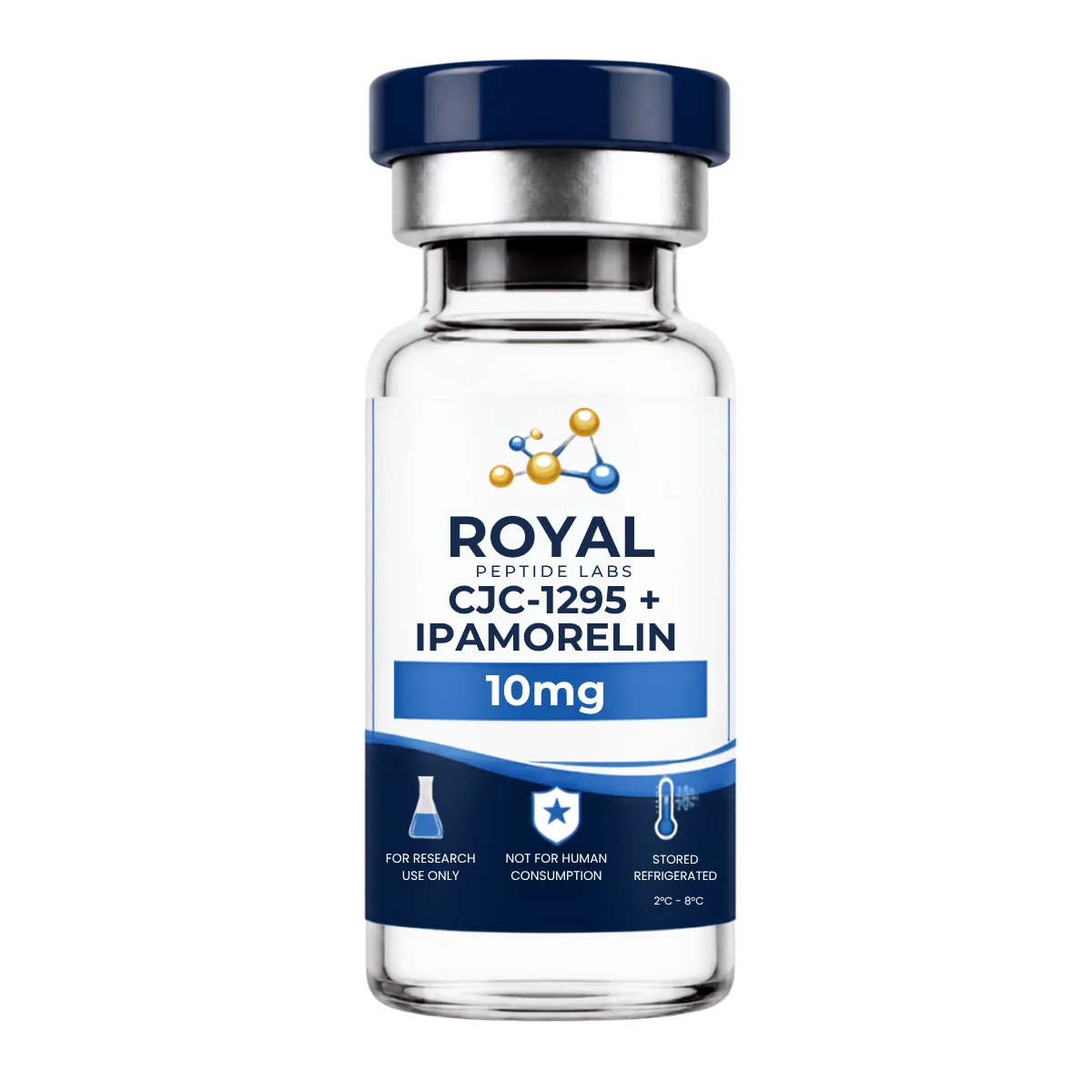
A complete, lot-specific COA for sermorelin or CJC-1295 should include, at minimum: a lot or batch identifier; HPLC purity data reported as a percentage; mass spectrometry identity confirmation with observed mass compared against expected mass (and, for CJC-1295, explicit confirmation of DAC status); appearance and solubility notes consistent with a correctly synthesized, lyophilized peptide; and testing date and laboratory. Royal Peptide Labs publishes lot-specific documentation on its certificate of analysis (COA) page, and researchers evaluating either compound should cross-reference the COA associated with the specific lot listed on the CJC-1295 + Ipamorelin research listing before beginning experimental work.
Why Verification Matters More in a Comparative Context
When a study’s conclusions rest on comparing sermorelin against CJC-1295, any single test article with unverified purity or identity introduces a confound difficult to distinguish from a genuine pharmacological difference. A CJC-1295 sample of unconfirmed DAC status, for example, could produce systemic-persistence data that looks like a structural-chemistry finding when the actual explanation is simply which variant was tested.
| Documentation Element | What It Confirms | Why It Matters for This Comparison |
|---|---|---|
| HPLC purity trace | Proportion of correctly synthesized peptide vs. impurities | Confirms comparability of purity level between test articles |
| Mass spectrometry result | Correct molecular identity | Distinguishes sermorelin, non-DAC CJC-1295, and DAC-conjugated CJC-1295 unambiguously |
| Lot-specific COA | Traceability to the specific vial in hand | Prevents reliance on generic, non-lot-specific documentation |
Sourcing Considerations: What to Look for in a Supplier
The quality of any research finding involving sermorelin or CJC-1295 is only as strong as the quality of the material used to generate it. This section outlines what a research buyer should evaluate before selecting a supplier for either or both compounds.
Documentation Transparency
A supplier serious about supporting legitimate research should make lot-specific COAs readily accessible, ideally referencing the specific lot number printed on the vial received, and — specifically for CJC-1295 — should clearly state which variant (with or without DAC) a given listing represents. Vague or generic purity claims not tied to a specific batch, or CJC-1295 listings that do not specify DAC status, are signals to look elsewhere.
Testing Methodology and Independence
Beyond publishing a COA, it matters who performed the testing and by what method. In-house HPLC/MS testing is a reasonable baseline, but third-party verification adds an additional layer of confidence by removing any incentive conflict between the synthesizing and certifying entities. Researchers building a long-term sourcing relationship should ask directly whether COAs reflect in-house testing, third-party testing, or both, for both sermorelin and each CJC-1295 variant carried.
Packaging, Labeling, and Cold-Chain Handling
Because both compounds are lyophilized peptides sensitive to temperature and moisture exposure, appropriate packaging and shipping practices that avoid unnecessary thermal excursions in transit are relevant quality indicators. Labeling should clearly indicate lot number, research-use-only status, storage requirements, and — for CJC-1295 — DAC status.
Research-Use-Only Framing and Compliance Posture
A supplier’s marketing and labeling language is itself a quality signal. A supplier that discusses sermorelin or CJC-1295 in terms of human outcomes, rather than research classification and mechanism, is a signal worth taking seriously in the wrong direction.
Supplier Evaluation Checklist
| Evaluation Criterion | What to Look For |
|---|---|
| Lot-specific COA availability | Published or easily requestable, tied to the exact lot received |
| Testing methodology disclosed | HPLC + MS at minimum; ideally third-party verified |
| CJC-1295 variant clarity | Listing explicitly states DAC status |
| Labeling accuracy | |
| Product-specific documentation | Specifications matched to the exact SKU — e.g., the CJC-1295 + Ipamorelin listing — not a generic catalog entry |
General guidance on evaluating purity documentation across the research peptide category is covered in research peptide purity: what to look for, which extends the documentation checklist above beyond this specific compound pair.
Common Research Questions and Misconceptions
Because sermorelin and CJC-1295 are frequently discussed together, several misconceptions recur often enough in research-community discussion to address directly.
“Sermorelin Is Just an Older, Weaker Version of CJC-1295”
This framing conflates structural age with receptor pharmacology. Sermorelin and CJC-1295 engage the same receptor through the same canonical signaling cascade; sermorelin’s comparatively shorter functional persistence is a structural-stability characteristic, not a statement about receptor-binding potency at the moment of engagement. A research protocol interested specifically in near-native GHRH(1-29) receptor behavior may reasonably prefer sermorelin precisely because it has not been substituted away from the native sequence.
“CJC-1295 Always Means the DAC Form”
As discussed earlier in this guide, CJC-1295 is used informally to refer to both the DAC-conjugated and non-DAC forms, which differ meaningfully in systemic persistence characterization. Assuming a given lot is the DAC form without confirming via the COA and mass spectrometry data is a common and avoidable sourcing error — and one that specifically undermines any comparison being drawn against sermorelin, since the appropriate CJC-1295 comparator depends on the research question being asked.
“They’re Interchangeable Because They Hit the Same Receptor”
Shared receptor selectivity does not imply shared structural stability, systemic persistence, or backbone fidelity to native GHRH. A research protocol that swaps sermorelin for CJC-1295, or vice versa, without accounting for these structural differences risks conflating a structural-chemistry effect with a receptor-pharmacology finding.
“Comparative Claims From Different Studies Can Be Pooled Directly”
Because assay conditions, cell lines, and readout technologies vary across laboratories, comparative claims about relative potency or persistence reported in different studies should not be pooled or averaged as though generated under identical conditions. Same-protocol, same-session comparative testing remains the most reliable way to isolate a true compound-to-compound difference from a methodological artifact.
| Question | Design Consideration |
|---|---|
| Which compound suits a near-native receptor-binding study? | Sermorelin, given its minimal structural modification from the native fragment |
| Which compound suits an extended in-vitro time-course study? | CJC-1295, given its substitution-based (and optionally DAC-based) stabilization |
| Which compound suits a systemic-persistence study? | DAC-conjugated CJC-1295, given its albumin-binding design |
| How to confirm which CJC-1295 variant is in hand? | Cross-reference the lot-specific COA’s mass spectrometry data against expected mass for each variant |
The 2026 GHRH Research Landscape: Where This Comparison Fits
Growth-hormone-axis research has continued to mature as a field, and the cjc-1295 vs sermorelin comparison sits within a broader research context worth surveying briefly as of 2026.
Sustained Interest in Structure-Persistence Relationships
Across the GHRH-analog research space, there is sustained interest in characterizing how specific structural choices — minimal modification, targeted substitution, and protein-conjugation chemistry such as DAC — map onto systemic persistence and receptor engagement behavior. Sermorelin and CJC-1295 together offer researchers a naturally contrastive pair for this kind of structure-function investigation, precisely because they share an identical starting fragment and diverge only in what has been engineered on top of it.
Sermorelin’s Continued Role as a Reference Compound
Rather than being displaced by more heavily engineered GHRH analogs, sermorelin has retained a specific role in the current research landscape as a near-native reference point — the compound against which the effects of substitution chemistry and albumin conjugation can be most cleanly measured, since it represents the shared starting fragment before either intervention is applied. This reference-compound role is likely to persist as new, further-engineered GHRH analogs continue to enter the research pipeline, since each new analog still ultimately needs a minimally modified baseline for comparison.
Methodological Advances Supporting This Research
Advances in analytical chemistry — higher-resolution mass spectrometry capable of cleanly distinguishing closely related peptide variants such as CJC-1295 with and without DAC, and more sophisticated in-vitro systems incorporating albumin-supplemented media to model protein-binding chemistry outside a whole-animal context — have made it increasingly feasible to characterize GHRH-analog structure-function relationships with a level of granularity that would have been impractical with earlier, simpler assay technology.
Where This Research Appears to Be Heading
Within the GHRH-analog class specifically, ongoing research directions include finer characterization of receptor-binding kinetics across structurally distinct analogs, refined analytical methods for distinguishing conjugated from unconjugated variants, and continued exploration of how structural persistence maps onto pulsatile signaling behavior in pituitary research models. Research laboratories tracking the GHRH-analog space specifically should expect continued growth in the published, searchable literature base — the references section below links directly to searchable PubMed and ClinicalTrials.gov queries that will surface new entries as they are indexed, rather than relying on any static summary that would inevitably become outdated.
Royal Peptide Labs’ broader growth hormone peptides category is a reasonable starting point for tracking adjacent compounds as the field continues to develop heading into 2026 and beyond.
What is the core structural difference between CJC-1295 and sermorelin?
Both are built on the identical 29-amino-acid GHRH(1-29) fragment, but sermorelin is generally characterized as that fragment carried forward with minimal modification, while CJC-1295 carries targeted amino acid substitutions engineered for resistance to enzymatic breakdown, and, in one commonly referenced form, an additional Drug Affinity Complex (DAC) that binds circulating albumin for extended systemic persistence.
Do CJC-1295 and sermorelin activate the same receptor?
Yes. Both are characterized in the research literature as selective agonists of the GHRH receptor (GHRH-R), a class B G-protein-coupled receptor expressed on pituitary somatotroph cells. Because the receptor target is shared, the meaningful comparative differences between the two compounds live in structural stability and systemic persistence rather than in receptor pharmacology itself.
Why is CJC-1295 generally characterized as more stable than sermorelin in research models?
CJC-1295’s targeted amino acid substitutions are engineered specifically to interfere with the enzymatic cleavage pathways, DPP-4 activity prominent among them, that rapidly degrade an unmodified GHRH(1-29) fragment such as sermorelin. The DAC-conjugated form of CJC-1295 adds a second, independent stabilization mechanism through covalent albumin binding.
Is CJC-1295 always sold with DAC included?
No. CJC-1295 is available in both a DAC-conjugated form and a non-DAC form, and these two variants are analytically distinguishable via mass spectrometry. Research buyers should confirm which variant a specific product listing and lot represent before designing a comparative protocol against sermorelin or any other reference compound.
Why would a research team choose sermorelin over the more heavily engineered CJC-1295?
Sermorelin’s minimal-modification profile makes it a useful research tool specifically when structural fidelity to the native GHRH(1-29) fragment is the priority — for example, in receptor-binding studies where introducing additional substitutions or a conjugate would add unwanted structural variables to the experiment.
Are sermorelin and CJC-1295 growth hormone releasing peptides (GHRPs)?
No. Both are GHRH receptor agonists, a mechanistically distinct category from GHRPs, which act through the ghrelin receptor (GHS-R1a). This distinction matters when designing studies intended to isolate GHRH-receptor-specific signaling from ghrelin-receptor-specific signaling.
How should a laboratory verify which CJC-1295 variant it has received?
The lot-specific certificate of analysis should include mass spectrometry data confirming the compound’s molecular identity, which differs measurably between the DAC-conjugated and non-DAC forms given the added mass of the DAC moiety. Researchers should cross-reference this data against the expected mass for each variant rather than relying on the product label alone.
Where can a laboratory find current, verifiable literature on CJC-1295 and sermorelin?
The most reliable approach is to search PubMed and ClinicalTrials.gov directly using the search links provided in the references section of this guide, since these databases are continuously updated and avoid the risk of relying on a static, potentially outdated literature summary.
Scientific References
The following are live search links into PubMed and ClinicalTrials.gov, rather than citations to specific papers, so that researchers always land on the current, indexed literature rather than a static and potentially outdated reference list.
- Sermorelin GHRH analog — PubMed search
- CJC-1295 growth hormone releasing hormone analog — PubMed search
- Drug affinity complex albumin binding peptide — PubMed search
- GHRH receptor pituitary somatotroph signaling — PubMed search
- DPP-4 resistance peptide stabilization — PubMed search
- Growth hormone releasing hormone fragment 1-29 — PubMed search
- Sermorelin — ClinicalTrials.gov search
- CJC-1295 — ClinicalTrials.gov search