

Wolverine Stack vs GLOW: Which Research Blend & Why
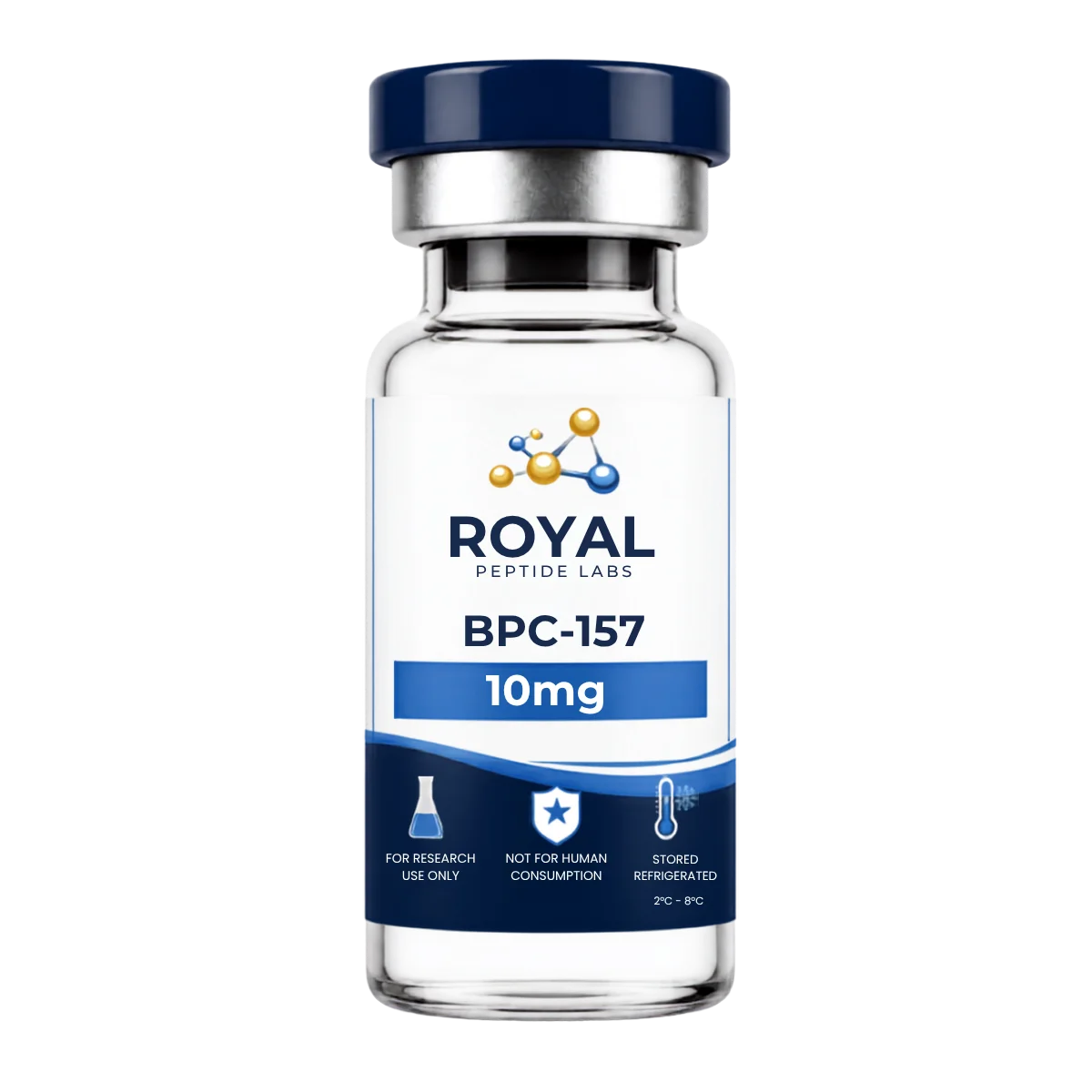
Wolverine Stack vs GLOW is, at its core, a comparison of two multi-peptide research blends built around different second-anchor chemistry paired to a shared repair-signaling foundation. The Wolverine Stack pairs a BPC-157-class pentadecapeptide with a TB-500-class Thymosin Beta-4 fragment, positioning it toward tendon, ligament, and general soft-tissue repair-signaling research. GLOW pairs that same BPC-157-class repair-signaling chemistry with GHK-Cu, a copper-coordinated tripeptide, positioning it toward dermal, connective-tissue, and extracellular-matrix research. Neither blend is a substitute for the other once a specific research question is defined — this guide compares their composition, mechanism, and research applications side by side, in strict research-use-only terms.
It is a question of which pathway emphasis actually matches the tissue system and research model under investigation. A study centered on tendon-repair signaling, angiogenesis-linked fibroblast behavior, or systemic connective-tissue research points toward the Wolverine Stack. A study centered on dermal biology, collagen cross-linking chemistry, or skin-adjacent extracellular-matrix remodeling points toward GLOW.
Everything that follows is written strictly for laboratory, in-vitro, and preclinical research audiences. Every comparison below is confined to classification, composition, structural chemistry, receptor and pathway associations reported in the literature, analytical verification, and the categories of research model in which each blend is studied.
What Is the Wolverine Stack? Composition and Research Orientation
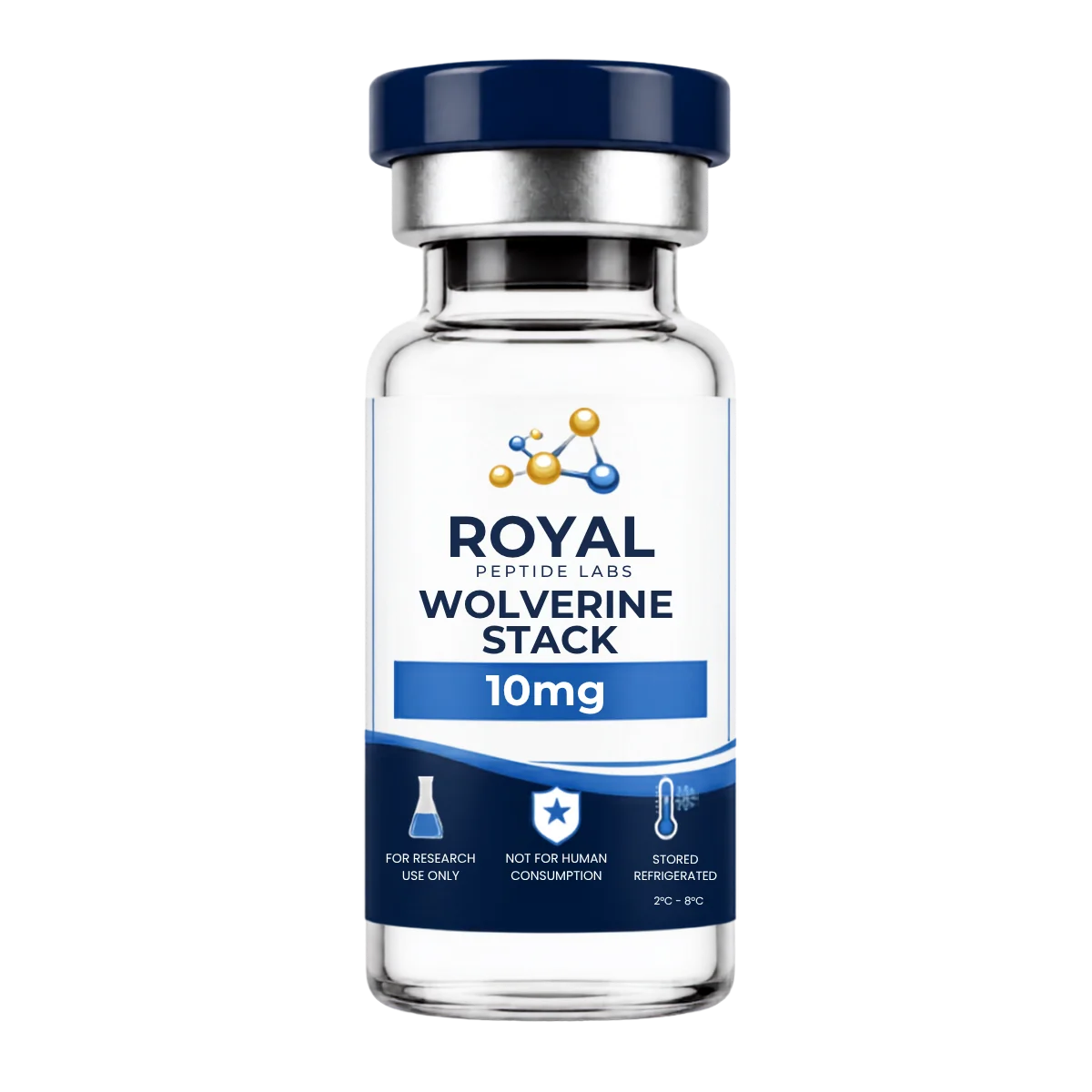
The Wolverine Stack is a combination research peptide formulation built around two component classes that are, individually, among the most frequently discussed compounds in the soft-tissue and connective-tissue repair literature. The first component class is BPC-157-class chemistry — a synthetic pentadecapeptide (a 15-amino-acid chain) derived from a partial sequence of a body-protection compound originally identified in gastric juice. The second is TB-500-class chemistry — a synthetic fragment corresponding to a region of the naturally occurring 43-amino-acid protein Thymosin Beta-4, a protein well characterized in the cell-biology literature for its actin-binding activity.
Royal Peptide Labs does not publish, and this guide does not invent, an exact proprietary ratio between these two components. What can be stated with confidence is the compositional class each component belongs to, the research rationale for pairing them, and the general research orientation that pairing produces: a formulation weighted toward angiogenesis-adjacent signaling (via the BPC-157-class component) and cell-migration or cytoskeletal-dynamics signaling (via the TB-500-class component), both of which are directly relevant to tendon, ligament, muscle, and general soft-tissue repair research models.
This article assumes familiarity with that background and focuses specifically on how the Wolverine Stack’s profile compares against GLOW’s.
Research Orientation Summary
- Primary tissue systems studied: tendon, ligament, muscle, and gastrointestinal-adjacent soft tissue.
- Primary signaling associations: angiogenesis-related pathways (BPC-157-class) and actin-binding/cell-migration pathways (TB-500-class).
- Labeled total peptide content: 10mg per vial, reflecting combined mass across both represented components, not a single compound’s molecular weight.
What Is GLOW? Composition and Research Orientation
GLOW is likewise a combination research formulation, but it is anchored by a structurally distinct second component: GHK-Cu, the copper(II) complex of the tripeptide glycyl-L-histidyl-L-lysine. GHK-Cu is a naturally occurring, copper-binding tripeptide first characterized in connection with human plasma, and its research relevance centers on copper-dependent enzymatic pathways — most notably lysyl oxidase, the enzyme responsible for collagen and elastin cross-linking, and copper-dependent superoxide dismutase activity relevant to antioxidant and redox-balance research. GLOW pairs this copper-peptide chemistry with the same broad class of body-protection-compound-derived repair-signaling peptides (the BPC-157-class family) discussed in connection with the Wolverine Stack, though GLOW places comparatively less emphasis on thymosin-derived fragment chemistry than the Wolverine Stack does.
As with the Wolverine Stack, Royal Peptide Labs does not disclose GLOW’s exact internal component ratio, and no such figure is asserted here. What distinguishes GLOW at the level of research rationale is its anchor compound: where the Wolverine Stack’s second component (TB-500-class) is associated with actin-binding and cell-migration signaling, GLOW’s second component (GHK-Cu) is associated with matrix cross-linking chemistry and copper-dependent enzymatic pathways — a meaningfully different mechanistic angle that shifts GLOW’s research orientation toward dermal biology, connective-tissue remodeling, and extracellular-matrix research rather than systemic tendon and ligament repair signaling.
Current specifications for this formulation are maintained on the GLOW 70mg research peptide listing, with full component-level detail available in the dedicated GLOW peptide blend research guide. As with the Wolverine Stack section above, this article builds on that background rather than repeating it in full.
Why These Two Component Classes Were Paired
GLOW’s pairing follows a related but distinct logic from the Wolverine Stack’s. Rather than combining two signaling-oriented peptides aimed at the same general tissue-repair cascade, GLOW combines a structural/enzymatic-cofactor chemistry (GHK-Cu’s copper-dependent matrix cross-linking) with a broader repair-signaling chemistry (BPC-157-class). The research rationale is that dermal and connective-tissue integrity depends on both proper matrix construction — collagen and elastin synthesis and cross-linking — and the signaling cascades that recruit and direct the cells responsible for that construction. A blend anchored in copper-peptide chemistry alone would speak only to the structural side of that equation; adding BPC-157-class chemistry brings the signaling side into the same preparation.
Research Orientation Summary
- Primary tissue systems studied: dermal, skin-adjacent, and connective-tissue models.
- Primary signaling associations: copper-dependent matrix cross-linking and redox pathways (GHK-Cu), plus body-protection-compound-derived repair signaling (BPC-157-class).
Wolverine Stack vs GLOW: At-a-Glance Comparison
The table below summarizes the identity parameters most relevant to deciding between these two formulations before designing an experimental protocol. It is intended as a navigational reference, not a substitute for the component-level detail covered in the sections that follow.
| Parameter | Wolverine Stack | GLOW |
|---|---|---|
| Formulation type | Multi-peptide combination blend | Multi-peptide combination blend |
| Core component classes | BPC-157-class + TB-500-class (Thymosin Beta-4 fragment) | GHK-Cu (copper tripeptide) + BPC-157-class |
| Royal Peptide Labs category | ||
| Primary research orientation | Systemic soft-tissue repair: tendon, ligament, muscle | Dermal & connective-tissue: skin, extracellular matrix |
| Anchor pathway distinct from shared component | Actin-binding / cell-migration signaling | Copper-dependent matrix cross-linking / redox signaling |
| Typical research models | Fibroblast, tenocyte, endothelial culture; tendon explants; animal models | Keratinocyte/fibroblast culture; 3D skin-equivalent models; tissue explants; animal models |
| Labeled total peptide content | 10mg per vial | 70mg per vial |
| Proprietary ratio disclosed | No | No |
| Supplied form | Lyophilized powder, research-use-only | Lyophilized powder, research-use-only |
Two rows deserve emphasis because they are the ones most commonly misread. First, the “labeled total peptide content” figures are not comparable as a measure of relative strength or complexity — they reflect each formulation’s own combined-mass labeling convention, not a shared potency scale.
A third point worth drawing out of the table: the “typical research models” row is a starting map, not an exhaustive boundary. Fibroblast culture, for instance, appears on both sides of that row because fibroblasts are relevant to both tendon-adjacent and dermal research contexts — what differs is which fibroblast population (tendon-derived versus dermal) and which downstream readout (migration and angiogenesis markers versus collagen cross-linking and matrix-protein synthesis markers) a given protocol would emphasize. Researchers should read every row of this table as a starting orientation for study design, then confirm specifics against the current product listing and certificate of analysis before finalizing a protocol.
The Shared Thread: BPC-157-Class Chemistry in Both Formulations
The most consequential fact in a Wolverine Stack vs GLOW comparison is not where the two blends differ — it is where they overlap. Both formulations draw on BPC-157-class repair-signaling chemistry, the body-protection-compound-derived pentadecapeptide family associated in the research literature with angiogenesis-related signaling and broad tissue-repair research applications, spanning gastrointestinal, tendon, ligament, and general soft-tissue research contexts.
This shared component matters for research design in three specific ways. Second, it provides a natural calibration point: because both blends share a compound class, a research team characterizing both can use BPC-157-class-only reference data (sourced independently, as a single compound) as a shared baseline against which each blend’s additional, distinguishing component can be evaluated. Third, it clarifies what the comparison actually is not about — this is not a comparison between two chemically unrelated blends, but between two different second-anchor strategies layered onto a shared repair-signaling foundation.
Why the Shared Component Does Not Make the Blends Interchangeable
The BPC-157-class component is, in both formulations, undisclosed as to exact proportion, and each blend’s overall research profile is shaped as much by its distinguishing second component — TB-500-class for the Wolverine Stack, GHK-Cu for GLOW — as by the shared element. A researcher selecting between the two based solely on the shared component would be ignoring the very feature that differentiates them for a given research question.
Using the Shared Component as an Experimental Calibration Point
In practice, a factorial design that exploits this shared component looks like this: a research team runs BPC-157-class material alone, the Wolverine Stack, and GLOW across the same assay and cell system, with a matched vehicle control. Because BPC-157-class chemistry is common to both blends, any signal present in the BPC-157-class-alone arm that also appears in both blend arms is more plausibly attributable to that shared component. Signal present in the Wolverine Stack arm but absent from both the BPC-157-class-alone arm and the GLOW arm is more plausibly attributable to TB-500-class chemistry specifically. The same logic applies in reverse for GLOW and GHK-Cu. This is not a substitute for directly testing each isolated single compound, but it is a useful triangulation approach when a full single-compound panel is not immediately feasible.
TB-500 and the Wolverine Stack’s Systemic Recovery Orientation
Where GLOW’s distinguishing component is GHK-Cu, the Wolverine Stack’s distinguishing component is TB-500-class chemistry — a synthetic fragment of Thymosin Beta-4. Understanding this component on its own terms is essential to understanding why the Wolverine Stack is positioned toward systemic soft-tissue repair research rather than dermal-specific research.
Structural and Functional Identity
Thymosin Beta-4 is a well-characterized 43-amino-acid protein recognized in the cell-biology literature as an actin-binding protein — meaning it interacts directly with actin, the core structural protein governing cell shape, motility, and cytoskeletal organization. The TB-500-class fragment used in research settings corresponds to a functional sub-region of this parent protein, and because it is shorter than the full native sequence, characterizing exactly which functional domains are retained in a given research-grade fragment remains an active area of structural inquiry. This is a meaningfully different structural story than GHK-Cu’s, which is a complete, naturally occurring tripeptide rather than a fragment of a larger protein.
Research Relevance to Systemic Tissue Repair
These are systemic, connective-tissue-oriented research questions, distinct from the collagen cross-linking and copper-dependent enzymatic chemistry that defines GLOW’s distinguishing component.
Why This Component Points the Wolverine Stack Toward Musculoskeletal Research
Laboratories whose research program centers on musculoskeletal or systemic connective-tissue repair signaling will generally find the Wolverine Stack’s component profile better aligned with that focus than GLOW’s.
Research Questions Suited to TB-500-Class Study
- How does TB-500-class exposure affect actin cytoskeletal organization, assessed via immunofluorescence, in cultured connective-tissue cell types?
- Does combining TB-500-class exposure with BPC-157-class exposure (as in the full Wolverine Stack) change migration kinetics relative to either component tested alone?
- How does TB-500-class fragment behavior in a given assay system compare with reference data reported elsewhere in the literature for the parent Thymosin Beta-4 protein?
GHK-Cu and GLOW’s Dermal/Connective-Tissue Orientation
GLOW’s distinguishing component, GHK-Cu, introduces a chemistry class entirely absent from the Wolverine Stack: copper coordination. This single structural feature is responsible for much of what differentiates GLOW’s research orientation from the Wolverine Stack’s.
Copper Coordination as a Distinct Mechanistic Class
GHK-Cu is the copper(II) complex of the tripeptide glycyl-L-histidyl-L-lysine — an established identity fact, not a claim about outcomes. Copper serves as a cofactor for several enzymes directly relevant to connective-tissue biology, most notably lysyl oxidase, which catalyzes the cross-linking of collagen and elastin fibers, and copper-dependent superoxide dismutase, relevant to antioxidant and redox-balance research. GHK-Cu’s tripeptide structure is understood in the pharmacological literature to facilitate copper delivery and handling in a manner distinct from free copper ions alone, which is the mechanistic basis for its prominence in dermal and connective-tissue research programs.
Why This Points GLOW Toward Dermal and Extracellular-Matrix Research
This is a distinct research emphasis from the tendon- and ligament-oriented systemic repair signaling associated with the Wolverine Stack’s TB-500-class component, even though both ultimately fall under the umbrella of tissue-repair research.
A Practical Chemistry Consequence: Handling Sensitivity
Copper coordination is not only a mechanistic distinction — it is a handling one. Copper-coordinated peptide complexes are commonly reported to exhibit a characteristic tint in solution (a genuine, observable physical property of the coordination chemistry, not a purity indicator on its own) and can show greater sensitivity to light and oxidative conditions than metal-free peptide chains.
For a direct, component-level comparison of GHK-Cu against BPC-157-class chemistry independent of either blend, see the dedicated GHK-Cu vs BPC-157 research comparison, which is the most relevant companion reference for understanding GLOW’s anchor chemistry in isolation.
Research Questions Suited to GHK-Cu Study
- Does GHK-Cu exposure alter lysyl-oxidase-linked gene expression or enzymatic activity in dermal fibroblast culture relative to vehicle control?
- How does GHK-Cu exposure affect markers of collagen and elastin synthesis in a 2D or 3D skin-model system?
- Does GHK-Cu exposure change superoxide dismutase activity or other redox-balance markers in the cell system under study?
- How does combined GHK-Cu and BPC-157-class exposure (as in the full GLOW blend) compare with GHK-Cu tested in isolation across the same matrix-remodeling readouts?
Structural and Chemical Profile Comparison
Because each blend combines two structurally distinct compound classes, a useful way to compare Wolverine Stack and GLOW is at the level of each represented component’s structural identity, independent of the blend context. The table below lays out these components side by side.
| Component | Peptide Class | Approximate Structure | Present In | Primary Research Association |
|---|---|---|---|---|
| BPC-157-class | Pentadecapeptide (gastric-protective-protein-derived) | 15-amino-acid linear chain | Wolverine Stack and GLOW (shared) | Angiogenesis-related signaling; broad tissue-repair research |
| TB-500-class | Thymosin Beta-4-derived fragment | Fragment of a 43-amino-acid parent protein | Wolverine Stack only | Actin-binding activity; cell migration research |
| GHK-Cu | Copper-coordinated tripeptide | 3-amino-acid chain (Gly-His-Lys) with a coordinated copper(II) ion | GLOW only | Matrix cross-linking (lysyl oxidase) and redox-balance pathways |
Reading this table row by row makes the Wolverine Stack vs GLOW distinction concrete at the chemistry level: both blends share the linear, metal-free BPC-157-class pentadecapeptide, but they diverge on their second component in both size and chemistry type. TB-500-class chemistry is a fragment of a considerably larger native protein, while GHK-Cu is a complete, naturally occurring tripeptide with a coordinated metal center — two structurally unrelated strategies for extending each blend’s research reach beyond BPC-157-class signaling alone.
Why Structural Verification Differs Between the Two Blends
This structural divergence carries directly into analytical verification. A laboratory verifying the Wolverine Stack needs methods capable of resolving two metal-free peptide chains of different length. A laboratory verifying GLOW needs methods capable of resolving a metal-free peptide alongside a copper-coordinated one — a complex that can behave differently under standard UV detection than an uncoordinated peptide chain of similar size. Neither is inherently more difficult, but they are different analytical problems, a point returned to in the purity section below.
Synthesis Complexity and Consistency Implications
Relative structural simplicity has downstream consequences for manufacturing consistency. The BPC-157-class pentadecapeptide and the GHK-Cu tripeptide are both comparatively short, linear-or-near-linear synthesis targets, which generally translates to more straightforward solid-phase synthesis and fewer opportunities for truncation or deletion byproducts. The TB-500-class fragment, because it represents a defined sub-region of a considerably larger native protein, carries its own synthesis consideration: researchers characterizing a given lot should be attentive to which specific region of the parent Thymosin Beta-4 sequence a supplier’s fragment corresponds to, since research-grade “TB-500” preparations across the industry are not assured to be sequence-identical without independent verification. This is one more reason lot-specific, component-resolved documentation matters more for a blend than a single defined compound.
Mechanism and Pathways: Where Each Blend’s Signaling Diverges
Beyond the shared BPC-157-class foundation, the research value of comparing Wolverine Stack and GLOW lies largely in how their distinguishing components engage different signaling pathways relevant to different phases and tissue contexts of the repair process.
Angiogenic Signaling: Shared but Not Identical in Context
Both blends carry BPC-157-class chemistry, and angiogenesis-related signaling — the formation of new blood vessels supporting tissue repair — is a research theme relevant to both.
Cell Migration: Two Different Mechanistic Routes
Both blends are relevant to cell-migration research, but by different mechanistic routes. The Wolverine Stack’s TB-500-class component engages migration through actin-binding and cytoskeletal dynamics directly.
Matrix Remodeling: GLOW’s Distinct Mechanistic Contribution
Extracellular matrix remodeling research is where GLOW’s GHK-Cu component contributes a mechanism the Wolverine Stack does not carry: copper-dependent lysyl oxidase activity directly implicated in collagen and elastin cross-linking, alongside matrix metalloproteinase / tissue-inhibitor-of-metalloproteinase balance research. While both blends are relevant to matrix-remodeling research broadly (since it is a general feature of the tissue-repair process), GLOW’s copper-coordination chemistry gives it a specific mechanistic entry point into cross-linking chemistry that the Wolverine Stack’s components do not share.
Redox and Antioxidant Pathways: GLOW-Specific
Copper-dependent superoxide dismutase activity and broader redox-balance research represent a pathway class unique to GLOW among these two blends, owing entirely to its GHK-Cu component. This is a genuinely distinct research angle from anything in the Wolverine Stack’s profile, and it is one of the clearest structural reasons the two blends are not interchangeable for mechanism-focused study design.
Inflammatory-Phase Signaling: An Open Question for Both
The earliest phase of the tissue-repair cascade — the inflammatory phase, involving immune-cell trafficking and early cytokine signaling — is a less thoroughly mapped research area for both blends than the proliferative and remodeling phases discussed above. Both BPC-157-class and GHK-Cu chemistry have been discussed in the literature in connection with early inflammatory-phase signaling, but the mechanistic detail here is considerably thinner than for angiogenesis, migration, or matrix cross-linking specifically.
| Pathway | Wolverine Stack | GLOW |
|---|---|---|
| Angiogenic / endothelial signaling | Yes — tendon/ligament/muscle context | Yes — dermal/skin-explant context |
| Actin-binding / cytoskeletal cell migration | Yes (TB-500-class) | No direct mechanism (indirect via BPC-157-class only) |
| Copper-dependent matrix cross-linking (lysyl oxidase) | No | Yes (GHK-Cu) |
| Copper-dependent redox / SOD-linked pathways | No | Yes (GHK-Cu) |
| General extracellular matrix remodeling | Yes (broad relevance) | Yes (broad relevance, with a specific copper-linked mechanism) |
Research Applications and Model Systems: Systemic vs Dermal-Focused Designs
The pathway distinctions above translate directly into which laboratory model systems each blend is typically studied within, and researchers designing a protocol should let the research question, not blend availability, dictate the choice of model tier.
Wolverine Stack: Systemic Soft-Tissue Model Systems
Wolverine Stack research commonly spans fibroblast, tenocyte, and endothelial cell-culture systems for isolated migration and angiogenesis assays; ex-vivo tendon and connective-tissue explant models that preserve native tissue architecture; and rodent or other animal models for systemic, multi-phase repair-process investigation. These model tiers are well suited to the blend’s tendon-, ligament-, and muscle-oriented research profile.
GLOW: Dermal and Skin-Adjacent Model Systems
These model tiers align with GLOW’s copper-peptide-anchored, dermal-oriented research profile.
Where the Two Blends’ Model Systems Overlap
Because both blends share BPC-157-class chemistry and both are ultimately studied within tissue-repair research broadly, there is genuine overlap: fibroblast culture and connective-tissue explant models are relevant to both, and a laboratory running a comparative program across both blends can often use a shared underlying model system while varying the readout emphasis — migration and angiogenesis assays for Wolverine Stack-focused questions, and matrix-protein/collagen-cross-linking assays for GLOW-focused questions.
Assay Readouts Mapped to Each Blend’s Distinguishing Component
Selecting the right readout matters as much as selecting the right model tier. For GLOW-focused work, collagen and elastin quantification assays, lysyl-oxidase activity assays, matrix-metalloproteinase/tissue-inhibitor panels, and redox-balance assays (such as superoxide dismutase activity measurement) are the readouts most directly connected to the GHK-Cu component. A protocol that defaults to a single generic readout — a proliferation assay alone, for instance — risks missing the specific mechanistic signal each blend’s distinguishing component is best positioned to produce.
Model Selection Table
| Model Tier | Wolverine Stack Emphasis | GLOW Emphasis |
|---|---|---|
| 2D cell culture | Fibroblast, tenocyte, endothelial cell lines | Keratinocyte, dermal fibroblast cell lines |
| 3D / organotypic models | Less commonly emphasized | Reconstructed skin-equivalent, organotypic co-culture |
| Ex-vivo explants | Tendon and connective-tissue explants | Skin and connective-tissue explants |
| Animal models | Systemic musculoskeletal repair research |
Analytical Purity: Verifying a Two-Component Blend
Verifying identity and purity for either blend is a more demanding analytical problem than verifying a single-compound research peptide, since a rigorous analysis ideally resolves and confirms each represented component independently rather than reporting one undifferentiated purity figure.
HPLC Considerations for Each Blend
Reverse-phase HPLC remains the standard purity-assessment method across peptide research generally. For the Wolverine Stack, a well-optimized gradient should resolve the BPC-157-class and TB-500-class components as two distinct, identifiable peaks based on their differing retention behavior. For GLOW, the analytical picture is somewhat different: GHK-Cu’s copper coordination can alter its optical and chromatographic behavior relative to a metal-free peptide of similar size, which means a method validated for resolving two uncoordinated peptide chains is not automatically appropriate for resolving a copper-coordinated component alongside a metal-free one. Laboratories evaluating GLOW’s documentation should look specifically for evidence that the testing method accounts for this difference.
Mass Spectrometry for Component Identity
Mass spectrometry confirms that each HPLC-resolved peak corresponds to the expected molecular identity of that component. For the Wolverine Stack, this means confirming BPC-157-class mass on one peak and TB-500-class fragment mass on the other. For GLOW, mass spectrometry needs to account for the mass contribution of the coordinated copper ion in the GHK-Cu peak, alongside independent confirmation of the BPC-157-class component’s mass.
Reading a Certificate of Analysis for Either Blend
A complete, lot-specific certificate of analysis for either formulation should include, at minimum: a lot or batch identifier; per-component HPLC purity data, ideally resolved separately rather than reported as a single blended figure; per-component mass spectrometry identity confirmation; appearance and solubility notes consistent with a correctly formulated and lyophilized preparation; and the testing date and, ideally, the testing laboratory. Royal Peptide Labs publishes lot-specific documentation on its certificate of analysis page, and researchers evaluating either blend should cross-reference the COA tied to the specific lot received rather than relying on a generic or previously issued document.
The Reference-Standard Problem for Blends
A subtler analytical issue worth naming directly: HPLC and mass spectrometry results are only as good as the reference standards they are run against, and for a multi-component blend as a whole, there generally is not a single certified reference standard for “the blend.” Verification necessarily happens at the level of each individual component, compared against that component’s own reference standard, and then reassembled conceptually into a picture of the full preparation. This is a reasonable question to put directly to a prospective supplier for either the Wolverine Stack or GLOW: how are reference standards sourced for each represented compound class, and does the answer differ between the metal-free components and, in GLOW’s case, the copper-coordinated one?
| Verification Element | Wolverine Stack Consideration | GLOW Consideration |
|---|---|---|
| HPLC resolution challenge | Two metal-free peptide chains of differing length | One metal-free peptide plus one copper-coordinated peptide with distinct optical behavior |
| Mass spectrometry target | BPC-157-class mass + TB-500-class fragment mass | BPC-157-class mass + GHK-Cu mass (including coordinated copper) |
| Appearance check | White to off-white lyophilized powder | |
| Lot-specific COA required | Yes | Yes |
Common Research Design Pitfalls When Comparing These Blends
Because Wolverine Stack and GLOW share a component but differ in formulation intent, several recurring design errors show up in comparative work involving both. Naming them directly is more useful than a generic caution.
Treating the Blends as a Single-Variable Comparison
Because the two formulations share BPC-157-class chemistry but differ in both the identity and the proportion of their second component, any observed difference between them in an assay cannot be attributed to a single variable. A rigorous comparative design should account for this by including single-compound reference arms (BPC-157-class alone, TB-500-class alone, GHK-Cu alone) alongside both full blends, rather than comparing the two blends in isolation and assuming any difference traces cleanly to one distinguishing component.
Assuming Supplier-to-Supplier Consistency
Named combination blends are not standardized across the research-peptide industry the way well-characterized single compounds are. A “Wolverine Stack” or “GLOW” sourced from one supplier is not assured to be compositionally identical to a product carrying the same name from another supplier. Comparative literature and internal lab findings should always be reported and interpreted with the specific supplier and lot documented, not the product name alone.
Over-Generalizing From a Single Assay Readout
Because each blend engages multiple pathways simultaneously, a single-readout assay — for example, a tube-formation angiogenesis assay alone — captures only one facet of either blend’s full research profile. Researchers should be explicit in study design and in any resulting analysis about which specific pathway a given assay is actually reporting on, rather than generalizing a single-pathway finding to the blend’s full profile.
Ignoring Vehicle and Assay-Specific Confounds
Failing to do so introduces a confound unrelated to either blend’s actual chemistry — a difference in observed effect could reflect a mismatched final concentration or a difference in vehicle/diluent proportion in the well, rather than a genuine difference in the blends’ biological activity.
Sourcing Considerations: Evaluating a Supplier for Either Blend
Because both Wolverine Stack and GLOW are combination products, sourcing decisions for either should apply a slightly higher documentation bar than sourcing a single-compound research peptide would require.
Documentation Transparency
A supplier serious about supporting legitimate combination-peptide research should make lot-specific, ideally component-resolved certificates of analysis readily accessible for both blends. Vague or aggregate purity claims that describe either formulation only as a single undifferentiated figure — without addressing each component’s identity and purity independently — are a meaningfully weaker signal for a blend than they would already be for a single compound.
Testing Methodology and Independence
It matters who performed the testing and by what method. In-house HPLC/MS testing is a reasonable baseline; third-party verification adds a further layer of confidence by removing any incentive conflict between the entity formulating a blend and the entity certifying its composition. This is worth asking about directly for both the Wolverine Stack and GLOW, since the analytical demands differ slightly between them (as discussed in the purity section above), and a supplier’s testing methodology should reflect that difference rather than applying an identical, generic process to every blend on the shelf.
Formulation Consistency Across Lots
Because each blend’s research value depends partly on consistency of composition across a study’s aliquots — and across time, if a study spans multiple lot purchases — formulation consistency is a sourcing consideration specific to combination products. A supplier should be able to speak to whether the relative composition of each named blend is held constant across production runs, even without disclosing the exact proprietary ratio itself.
Red Flags Worth Naming Directly
- No lot-specific documentation for either blend, or documentation that appears identical across multiple listed batches without update.
- A blend COA that reports only a single, undifferentiated purity figure with no indication either component was resolved independently.
- For GLOW specifically, no acknowledgment that copper-coordinated chemistry requires a distinct analytical approach from metal-free peptide verification.
- Marketing language describing outcomes, results, or effects rather than research applications and mechanism-level rationale.
- Pricing dramatically below category norms for either blend with no corresponding testing documentation to justify confidence in composition.
Supplier Evaluation Checklist
| Evaluation Criterion | What to Look For |
|---|---|
| Lot-specific COA availability | Published or readily requestable, tied to the exact lot received, for both Wolverine Stack and GLOW |
| Component-resolved testing | HPLC/MS data addressing each component independently, including copper-coordination-appropriate methods for GLOW |
| Testing methodology disclosed | HPLC + MS at minimum; ideally third-party verified |
| Labeling accuracy | |
| Formulation consistency | Supplier can speak to lot-to-lot compositional consistency for each named blend |
| Product-specific documentation | Specifications matched to the exact SKU — the Wolverine Stack 10mg listing or the GLOW 70mg listing — not a generic catalog entry |
The 2026 Research Landscape for Multi-Peptide Recovery Blends
Tissue-repair and connective-tissue peptide research has expanded considerably in recent years, and combination blends like Wolverine Stack and GLOW sit near an increasingly active edge of that expansion as of 2026.
Growing Interest in Multi-Target, Comparative Research
The broader trajectory across peptide research generally has moved from single-compound characterization toward increasingly complex, multi-target and comparative-blend investigation. This mirrors developments visible elsewhere in the research-peptide landscape — the tri-receptor design strategy discussed in Royal Peptide Labs’ own metabolic-peptide research reflects the same underlying hypothesis that complex biological processes are unlikely to be governed by a single pathway in isolation, a hypothesis that applies just as directly to tissue-repair signaling.
Expanding Comparative Literature Across Recovery Blends
As more named combination formulations enter the research-peptide space, the comparative literature addressing how they differ in component emphasis and research application — exactly the kind of Wolverine Stack vs GLOW comparison built throughout this guide — is expanding accordingly. This reflects the research community moving past simply demonstrating that combination approaches are feasible, toward more granular questions about which specific component pairings suit which specific research questions and tissue systems.
Methodological Advances Supporting This Research
Advances in assay technology — higher-throughput migration and angiogenesis screening platforms, improved analytical methods for resolving multi-component and metal-coordinated peptide mixtures, and more sophisticated 3D and ex-vivo tissue-explant systems — have made it increasingly feasible to characterize combination blends with a level of mechanistic detail that would have been impractical for earlier-generation research relying on simpler assay technology.
Where Recovery-Peptide Comparative Research Appears to Be Heading
Within the tissue-repair and connective-tissue research space specifically, ongoing directions include finer characterization of component-level contributions within named blends, comparative structural and functional analysis across formulations like Wolverine Stack and GLOW, and continued refinement of analytical methods for verifying multi-peptide identity and composition — including copper-coordinated components — at increasingly rigorous standards. Research laboratories tracking this space should expect continued growth in the published, searchable literature, which is why the references section below links directly to searchable PubMed and ClinicalTrials.gov queries rather than to a static summary.
Staying Current as a Research Buyer
Given how quickly this research area moves, laboratories sourcing either the Wolverine Stack or GLOW for ongoing programs are well served by periodically revisiting supplier documentation, re-running the PubMed and ClinicalTrials.gov searches referenced at the end of this guide, and maintaining relationships with suppliers who demonstrate ongoing investment in testing rigor rather than a one-time compliance posture. This is particularly relevant for comparative work spanning both blends, where consistent, up-to-date documentation on both products over the life of a research program materially affects how confidently any comparative finding can be interpreted.
What is the core compositional difference between Wolverine Stack and GLOW?
Both blends share BPC-157-class repair-signaling chemistry, but they differ in their second anchor component: the Wolverine Stack pairs it with a TB-500-class Thymosin Beta-4 fragment, while GLOW pairs it with GHK-Cu, a copper-coordinated tripeptide. That second component is what drives each blend’s distinct research orientation.
Do Wolverine Stack and GLOW share any component classes?
Yes. Both formulations draw on BPC-157-class chemistry, the body-protection-compound-derived pentadecapeptide family associated with angiogenesis-related signaling and broad tissue-repair research. Neither blend’s exact component ratio is disclosed.
Which blend is more relevant to dermal research specifically?
GLOW, owing to its GHK-Cu component, which is directly associated in the literature with collagen and elastin cross-linking chemistry (via lysyl oxidase) and copper-dependent redox pathways relevant to skin and connective-tissue research models.
Which blend is more relevant to tendon, ligament, or musculoskeletal research models?
The Wolverine Stack, owing to its TB-500-class component, which engages actin-binding and cell-migration pathways directly relevant to tendon, ligament, and muscle tissue-repair research.
Are the exact component ratios for either blend published?
No. Royal Peptide Labs does not disclose a proprietary ratio for either formulation, and this guide does not estimate or invent one. Researchers requiring precisely controlled, independently known concentrations of a single component should source that compound separately.
Why do the two blends list different total peptide content (10mg vs 70mg)?
Each figure reflects that specific formulation’s own combined peptide mass across all represented components, not a shared potency scale between products.
How should purity be verified for a two-component blend versus a single compound?
Ideally through HPLC and mass spectrometry data resolved separately for each component rather than a single undifferentiated purity figure. GLOW’s GHK-Cu component adds an additional analytical consideration, since copper coordination can alter chromatographic and optical behavior relative to a metal-free peptide.
Is either blend intended for any human or veterinary application?
No. Both Wolverine Stack and GLOW are supplied strictly for in-vitro laboratory and preclinical research use by qualified personnel within appropriate institutional settings.
Where can researchers find current literature on the compound classes represented in each blend?
The most reliable approach is to search PubMed and ClinicalTrials.gov directly using the search links provided in the references section below, since these databases are continuously updated and avoid the risk of relying on a static, potentially outdated literature summary.
Does either blend contain any component not discussed in this guide?
This guide describes the component classes each blend is publicly discussed as containing — BPC-157-class and TB-500-class chemistry for the Wolverine Stack, and GHK-Cu with BPC-157-class chemistry for GLOW.
Is one blend generally considered more “potent” than the other?
No meaningful potency comparison exists between the two, because they are not interchangeable tools measured on a shared scale — they engage different distinguishing pathways (actin-binding/cell-migration signaling versus copper-dependent matrix cross-linking and redox signaling) in different tissue contexts. Differing labeled total peptide content (10mg versus 70mg) reflects each formulation’s own mass-labeling convention, not relative strength.
Should a new research program start with the blends or with the individual single compounds?
That depends on the research question. Programs with a specific mechanistic hypothesis about one compound class are generally better served starting with the relevant single compound. Programs conducting exploratory screening across a new model system, or specifically comparing how the Wolverine Stack’s and GLOW’s distinguishing components perform against each other, are reasonably served starting with the pre-formulated blends and following up with single-compound work once a signal worth isolating has been identified.
Scientific References
The links below are live search queries into PubMed and ClinicalTrials.gov rather than citations to any specific paper, so that researchers always land on the current, indexed literature for these compound classes rather than a static reference list that could become outdated.